

Best cruise ship amenities became obvious when Margaret checked the bathroom
Margaret taught me to judge cruise ships from the bathroom outward. I used to begin with the dining room, the theater, or the itinerary. she began with the shower threshold, the grab bars, the night light, and how far the cabin sat from the elevator.
That is why best cruise ship amenities are not always the ones shown in the television commercial. a roller coaster at sea may impress the grandchildren, but a quiet dining room, a proper medical center, reliable Wi-Fi, and a cabin you can move through safely may save the trip.
I am Arthur Pendleton of ElderTrip.com, a retired history professor with more than 12 years of cruising behind me. by the end of this review, you will know which amenities I think seniors should value, which ones are nice but not essential, and which ones can become expensive distractions.
In this guide
- When Margaret made the bathroom the first amenity review
- When Tom traded entertainment for a quiet breakfast room
- When the flashy feature did not help on day four
- When the right amenities depended on the traveler, not the ship
- When the useful amenities finally beat the glamorous ones
- Arthur’s verdict
- Questions I’m often asked
When Margaret made the bathroom the first amenity review
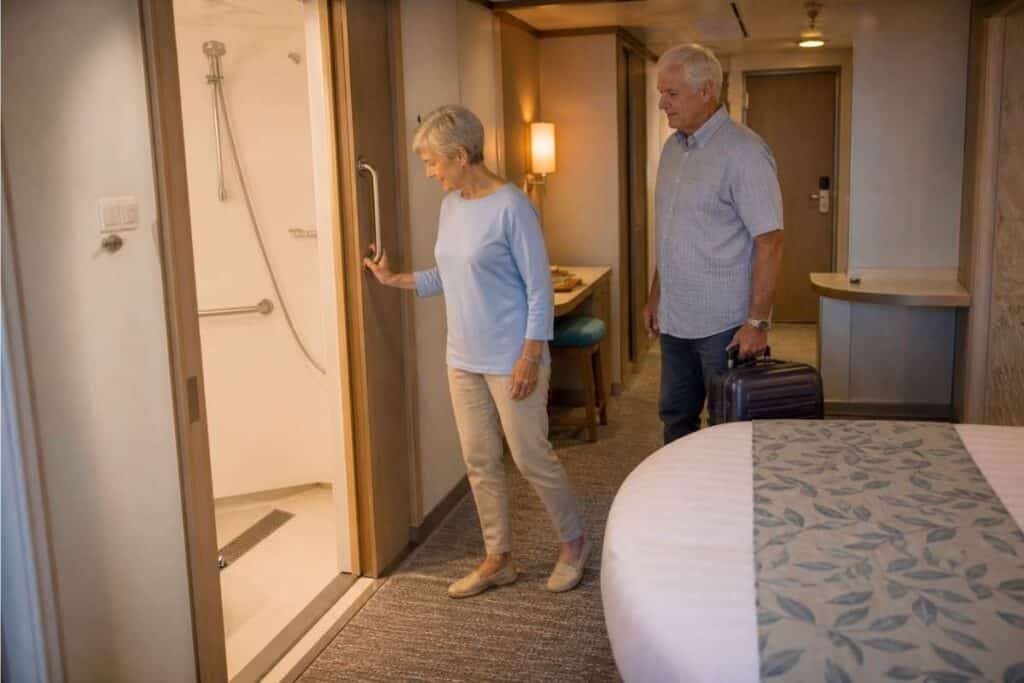
An amenity matters for seniors when it reduces fatigue, confusion, pain, cost surprises, or isolation. if it only looks dramatic in a photo, I put it lower on the list.
Margaret once walked into a cabin, looked at the step into the shower, and said, “Arthur, this is where optimism goes to slip.” she was not being gloomy. she was being a retired nurse.
That is the practical frame I use now. a ship can have a glittering atrium, but if the cabin layout makes each morning awkward, the atrium is not doing the hard work.
Comfort beats spectacle every morning
Let me be direct about this. the amenity you use every day matters more than the one you photograph once.
A good mattress, a walkable ship, accessible dining, shaded outdoor seating, and a calm lounge will affect your whole week. a thrill ride may be impressive, but it is not the backbone of a senior-friendly cruise.
When Tom traded entertainment for a quiet breakfast room
Cruise ship amenities work well for seniors when they make the day easier: eating, sleeping, walking, communicating, resting, and getting help when something goes wrong. the best amenities are often quiet by design.
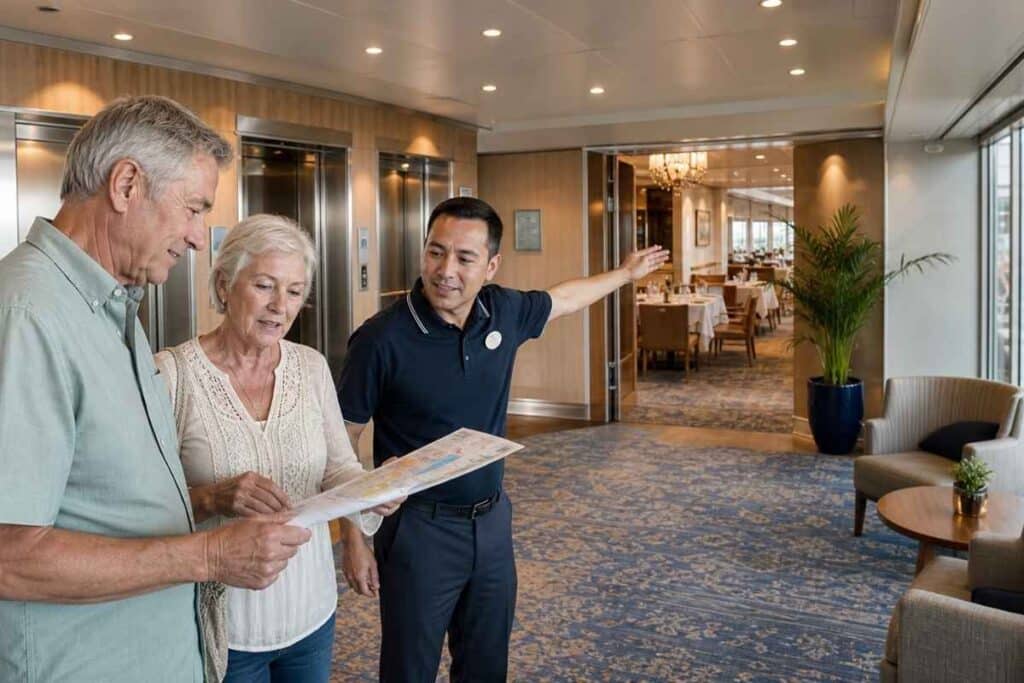
Tom once booked a ship because it had splendid reviews for entertainment. by day three, he admitted he would have traded half the shows for a quieter breakfast room and a cabin closer to the elevator.
That confession stayed with me. not because entertainment is unimportant, but because seniors often discover what they needed only after they are already tired.
The CDC yellow book guidance on cruise ship travel says medical capabilities can vary by ship size, itinerary, cruise length, and passenger mix. that is why I treat the medical center as a real amenity, not a line buried near the bottom of a deck plan.
The ship should make tomorrow easier
A good amenity quietly removes a problem. it helps you eat well, sleep well, move safely, communicate with family, find a seat, or rest without feeling you are missing the entire vacation.
If you are still deciding which line fits your travel style, my broader guide to best cruise lines shows how amenities, ship size, pace, cost, and atmosphere fit into the same decision.
When the flashy feature did not help on day four
The warning is that a long amenity list can distract seniors from the features they will actually use. more amenities do not always mean better comfort.
I have seen travelers choose a ship because the top deck looked spectacular, then spend most of the week indoors because the wind was too sharp, the elevators were crowded, and the quiet lounge was too far from the cabin.
Available onboard does not mean included. that small distinction has emptied many cheerful wallets, especially around Wi-Fi, specialty dining, thermal suites, room service, and priority packages.
That cost question matters more for older travelers than many brochures admit. Squaremouth’s 2026 senior cruise data found that senior cruise travelers often spend more than their preferred budget, which is why I treat included amenities and add on fees seriously.
The exact ship matters more than the fleet name
Tom assumed every ship in a fleet would feel the same. that is how people end up comparing a new ship with a 20 year old vessel and wondering why the bathroom, dining, and technology feel like different decades.
Review the exact ship, exact cabin category, exact deck plan, and exact included benefits. a brand reputation is helpful, but it does not widen your bathroom door.
When the right amenities depended on the traveler, not the ship
The right amenities depend on your health, mobility, dining preferences, travel companions, and need for quiet. a grandparent traveling with children needs a different ship than a solo widow or a couple celebrating an anniversary.
For Margaret, the cabin comes first. for Tom, dining noise became the surprise issue. for me, enrichment matters because I would rather hear a good lecture on Roman trade routes than attend another jewelry presentation disguised as culture.
Viking and Holland America often do well on enrichment and calmer atmosphere. Princess can be practical for families and Alaska. Celebrity has strong modern ship design. Regent and Silversea reduce many decisions by including more from the beginning, though the fare reflects that.
Family amenities change the priority list
Royal Caribbean, Carnival, Norwegian, Disney, and MSC offer enormous amenity lists, especially for families. if you are sailing with grandchildren, those amenities may matter. if you are sailing as a senior couple, do not let the waterpark choose your ship.
For families choosing a ship with children and grandparents together, my guide to best cruise lines for families explains how amenities should serve both the youngest and oldest travelers.
When the useful amenities finally beat the glamorous ones
The best cruise ship amenities for seniors are usually practical: accessible cabins, elevators, medical centers, quiet dining, enrichment programs, reliable Wi-Fi, shaded seating, and easy shore excursion support. they sound plain because good comfort often does.
Margaret and I made this table after a sailing where the ship had a beautiful atrium and a shower door that tried to defeat us every morning. beauty is welcome. function gets the vote.
| Amenity | Why it matters | Best for | Arthur’s priority |
|---|---|---|---|
| accessible cabin design | reduces fall risk and daily strain | mobility concerns | essential |
| medical center | supports urgent onboard care | older travelers and long itineraries | essential |
| reliable elevators | reduces walking and stair use | large ships and sore knees | essential |
| quiet dining options | protects conversation and comfort | couples and solo seniors | high |
| enrichment programs | adds meaning without physical strain | curious travelers | high |
| Wi-Fi access | keeps family and logistics reachable | solo travelers and caregivers | high |
| thermal suite or spa | helps relaxation on sea days | rest focused travelers | nice if priced fairly |
| waterparks and thrill rides | entertains children and teens | multigenerational families | low for seniors alone |
The amenity I would check first
I would check cabin safety first, then ship walkability, dining comfort, medical support, and Wi-Fi. after those are settled, I would look at spas, specialty restaurants, shows, pools, and private lounges.
That order may sound unglamorous. so does a handrail, until you need one.
Arthur’s verdict
The best cruise ship amenities for seniors are the ones that make the trip easier every day. safe cabins, manageable distances, good food, quiet rooms, medical support, enrichment, Wi-Fi, and shade will beat flashier features more often than the brochures admit.
Margaret was right to begin in the bathroom. if the cabin works, the ship has a chance. if the cabin fights you every morning, the rest of the amenity list has to work too hard.
Choose amenities by use, not by glamour. the right ship should help you conserve energy for the places, meals, conversations, and views you came aboard to enjoy.
Want tips like these every week?
Arthur & Margaret share honest cruise reviews, senior-friendly port guides, and exclusive deals — straight to your inbox. 2,000+ readers. No spam.
Questions I’m often asked
These are the questions I hear when someone starts comparing ship features and begins to suspect half of them were invented by a marketing committee.
What are the best cruise ship amenities for seniors?
The best amenities for seniors are accessible cabins, reliable elevators, quiet dining, medical facilities, enrichment programs, good Wi-Fi, shaded outdoor seating, and flexible shore excursion support. I would check those before spas, lounges, or entertainment venues.
Are accessible cabins worth booking?
Yes, if you need the space, shower design, grab bars, alarms, or wider doors. accessible cabins are limited, so book early and confirm the exact features with the cruise line before paying.
Is Wi-Fi important on a cruise?
For many seniors, yes. Wi-Fi helps with family contact, medical messages, travel changes, banking alerts, and simple peace of mind. check whether it is included, limited, or priced as a daily package.
Do bigger ships have better amenities?
Bigger ships usually have more amenities, but not always better senior comfort. they may also bring longer walks, crowded elevators, louder spaces, and more complex deck plans.
Are spa and thermal suite passes worth it?
They can be worth it on a cruise with sea days, cool weather, or a traveler who truly uses quiet relaxation spaces. they are not worth it if the pass is expensive and your itinerary keeps you ashore most days.
Best cruise ship amenities are not there to impress your neighbors when you get home. they are there to make each day at sea easier, safer, calmer, and more satisfying. start there, and the ship becomes a better companion.