

Cruise Packing List for Seniors: 15 Essentials I Never Sail Without
Robert Whitmore taught me more about cruise packing than any glossy travel checklist ever has. He has arthritis, walks with a stick, and still manages a port day with more good humor than most people half his age.
His secret is not complicated. His cruise packing list for seniors begins with medication, shoes, documents, and the small comforts that keep a day from becoming harder than it needs to be.
I am Arthur Pendleton, and after 12 years of cruising, I have stopped asking, “What might I want?” I ask a better question now: “What will keep me comfortable, steady, and prepared if the day does not go exactly as planned?”
In this guide
- What makes a senior packing list different
- Documents and trip papers
- Medication and health items
- Clothing that actually earns space
- Shoes, mobility, and balance
- Common mistakes I see
- Arthur’s verdict
- Questions I’m often asked
What makes a senior packing list different
A senior cruise packing list is different because the consequences of forgetting something are different. A younger traveler may shrug off uncomfortable shoes or a missing sweater. At 68, I would rather not test my knees, my sleep, or my patience that way.
For travelers 60+, packing should begin with the essentials that protect independence: medication, documents, mobility, vision, hearing, sleep, and comfort. Clothing comes after that.
Kiplinger notes that retiree cruise packing should account for comfort, mobility, destination, and health needs rather than simply filling a suitcase with vacation clothing. That is the right emphasis. A cruise is easier when the practical pieces are handled first. Kiplinger’s cruise packing list for retirees makes that point clearly.
For the larger master list, see my full guide to what to pack on a cruise.
Documents and trip papers
Documents should be the first section of your checklist. Not the last. Not the thing you remember while the taxi is waiting.
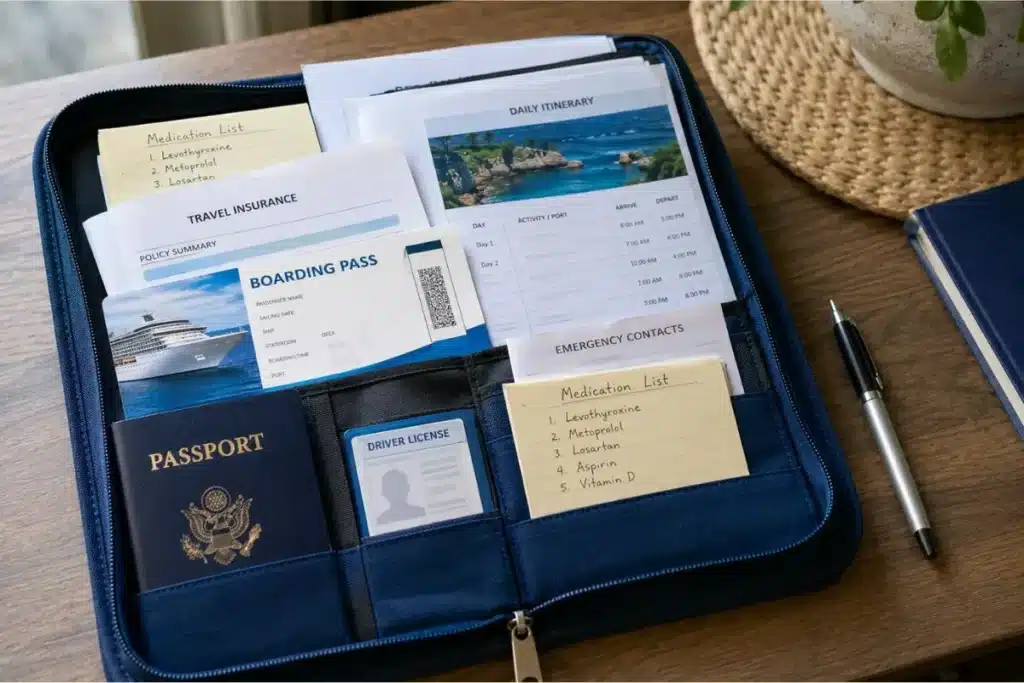
Pack these in a folder or pouch you can reach easily:
- Passport book, if you have one
- Government photo ID
- Cruise boarding pass
- Luggage tags
- Travel insurance policy
- Emergency contact list
- Medication list
- Copies of prescriptions
- Printed itinerary
- Credit card for the onboard account
The U.S. State Department recommends that cruise passengers travel with a passport book, even when it may not be required by the cruise line, because emergencies can require international air travel home. It also recommends carrying copies of important travel documents separately from the originals. The State Department cruise ship guidance is worth reading before any international sailing.
Margaret and I keep one paper copy in the carry-on and one digital copy on the phone. That may sound old-fashioned. Old-fashioned works beautifully when Wi-Fi does not.
Medication and health items
Medication belongs in your carry-on. That is the one rule I would not negotiate.

Your checked suitcase may arrive late. Airline luggage may be delayed. A transfer can be slower than expected. None of those should separate you from medication you need.
- Daily prescription medication
- Extra doses for travel delays
- Written medication list
- Copies of prescriptions
- Doctor letter, if needed
- Motion sickness remedy approved by your physician
- Pain reliever you already tolerate
- Allergy medicine
- Stomach medicine
- Spare glasses
- Hearing aid batteries or charger
- Medical device supplies
Consult your physician or pharmacist before travel if you use controlled medication, injectable medication, refrigerated medication, oxygen, or a medical device. Cruise ships do have medical centers, but they are not your home pharmacy.
Because this topic deserves more detail than a short checklist can give it, I keep a separate guide to cruise medication packing list for prescription planning, extra doses, doctor letters, and carry-on safety.
Clothing that actually earns space
Most seniors do not need more cruise clothing. They need more useful cruise clothing.
For a seven-night cruise, I would start with this:
- Four or five casual tops
- Two or three comfortable bottoms
- One light sweater or cardigan
- One rain shell or windbreaker
- One or two dinner outfits
- Sleepwear
- Undergarments and socks, plus extras
- Swimsuit, if you use the pool or spa
- Sun hat or warm hat, depending on destination
The destination decides the adjustments. Alaska needs layers and rain protection. The Caribbean needs sun protection and breathable clothing. Europe may require modest clothing for churches, cathedrals, or formal dining rooms.
Do not pack around imaginary evenings. Pack around the cruise you actually booked. Cunard asks more of your dinner wardrobe than Norwegian. A river cruise usually asks more of your walking shoes than your formal jacket.
Shoes, mobility, and balance
Shoes are where many cruise packing lists fail older travelers. They mention sandals and formal shoes, then forget the port day.
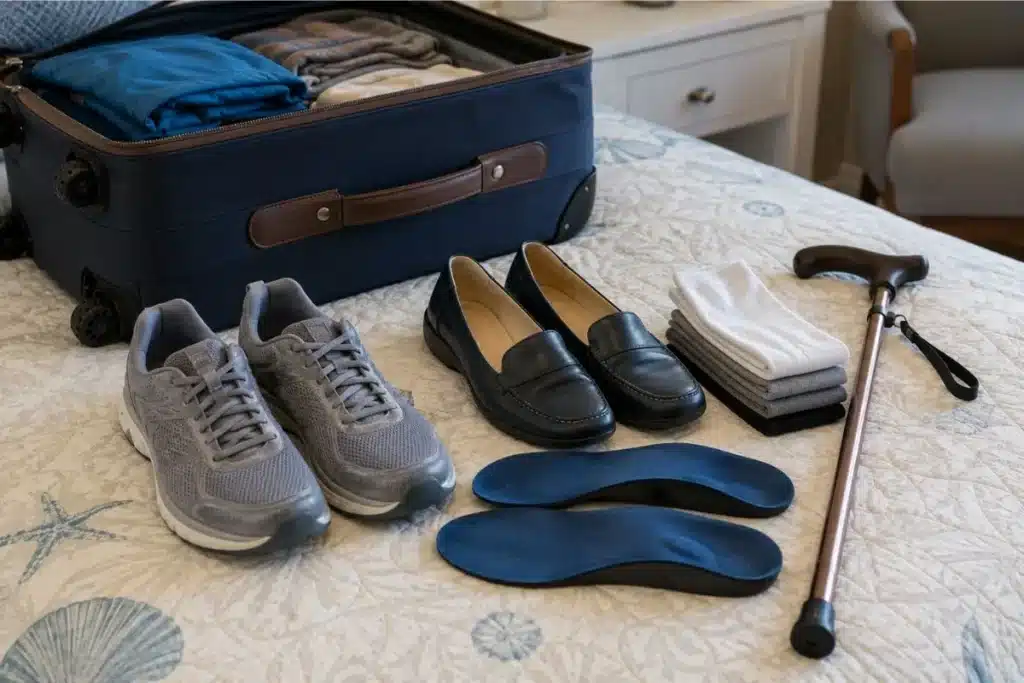
You need one pair of excellent walking shoes with grip. They should be broken in before the cruise. Not tested in the terminal. Not tested in Juneau. Not tested on a wet gangway while people are politely waiting behind you.
- Supportive walking shoes
- Dinner shoes with stable soles
- Cabin or pool sandals
- Extra socks
- Orthotics, if you use them
- Cane tip replacement, if applicable
Robert once told me he would rather forget a dinner jacket than the shoes he trusts. That is the sort of sentence a man earns after enough port days.
If mobility is a concern, review the ship layout before you leave home. A cabin near elevators can matter more than a slightly better view.
Cabin comfort items
Cruise cabins are efficient, not spacious. A few small comfort items can make the room easier to use without turning your suitcase into a storage unit.
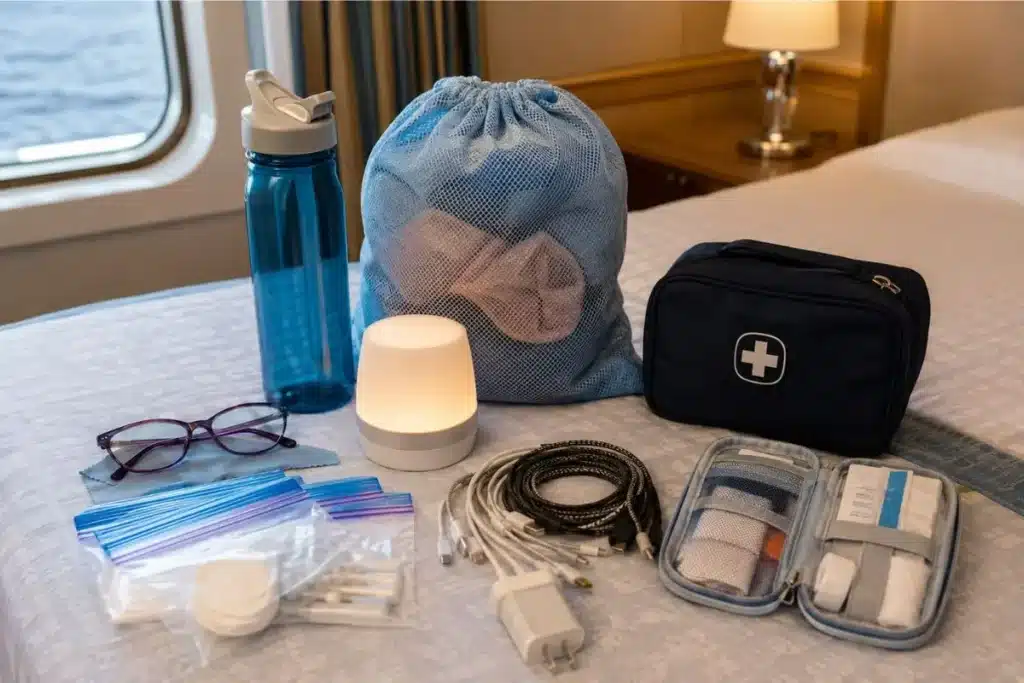
- Small nightlight
- Soft laundry bag
- Zip bags for small items
- Reading glasses
- Refillable water bottle
- Small first-aid pouch
- Pen or highlighter
- Approved charging cables
Be careful with electrical items. Many cruise lines restrict irons, steamers, extension cords, power strips, and heating devices because of fire risk. Check your cruise line’s prohibited items page before packing anything that plugs in.
A nightlight is the one small item I now appreciate more than I expected. A dark cabin bathroom at 2 a.m. has taught many travelers a lesson they did not request.
Common cruise packing mistakes seniors make
The first mistake is overpacking clothing and underpacking comfort. Five extra shirts will not help sore feet.
The second mistake is putting medication in checked luggage. I have said it already, and I will say it again because it matters.
The third mistake is packing for the brochure version of the cruise instead of the real one. Brochures show dinner, sunshine, and smiling couples. Real cruises include wet sidewalks, long corridors, air-conditioned theaters, and early shore excursion meeting times.
The fourth mistake is buying new travel gadgets too close to departure. If you need a cane, charger, day bag, or walking shoe, test it at home first.
Cruise packing list for seniors by priority
| Priority | Pack this first | Why it matters |
|---|---|---|
| One | Medication and medical supplies | These must stay with you and may be difficult to replace |
| Two | Passport, ID, boarding pass, insurance | Documents protect boarding and emergency travel |
| Three | Walking shoes and mobility items | Comfortable feet decide how much you enjoy port days |
| Four | Layered clothing by destination | Useful clothing beats extra clothing |
| Five | Carry-on essentials | Your checked suitcase may arrive later |
| Six | Cabin comfort items | Small items can make the room safer and easier |
Arthur’s verdict
A cruise packing list for seniors should begin with the body, not the wardrobe. Medication, documents, shoes, mobility, sleep, and comfort come first.
Once those are handled, packing becomes calmer. You can choose clothing for the actual itinerary instead of stuffing the suitcase with guesses.
The goal is not to be prepared for every possible event. The goal is to be prepared for the predictable ones, so the voyage feels like travel rather than problem-solving.
Want tips like these every week?
Arthur & Margaret share honest cruise reviews, senior-friendly port guides, and exclusive deals — straight to your inbox. 2,000+ readers. No spam.
Questions I’m often asked
What should seniors pack first for a cruise?
Pack medication, documents, glasses, hearing aid supplies, mobility items, and comfortable shoes first. Clothing should come after the essentials that protect health and travel access.
Should seniors bring extra medication on a cruise?
Yes. Bring extra medication in case of delays, and consult your physician or pharmacist before travel. Keep medication in your carry-on, not in checked luggage.
How many outfits should I pack for a seven-night cruise?
Most travelers can manage with four or five casual tops, two or three bottoms, one or two dinner outfits, and layers suited to the destination.
Do I need formal clothes on every cruise?
No. Dress codes vary by cruise line. Cunard and some premium lines are more formal, while Carnival and Norwegian are usually more relaxed. Check your line before packing.
What is the most common senior packing mistake?
The most common mistake is overpacking clothing while forgetting practical comfort items like medication, walking shoes, rain protection, documents, and spare glasses.