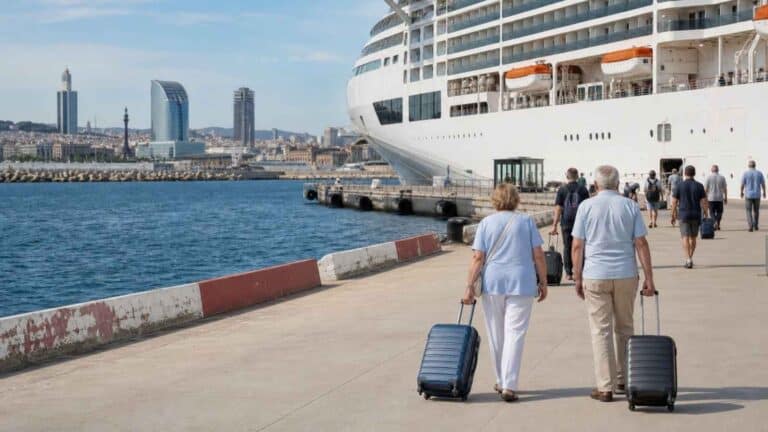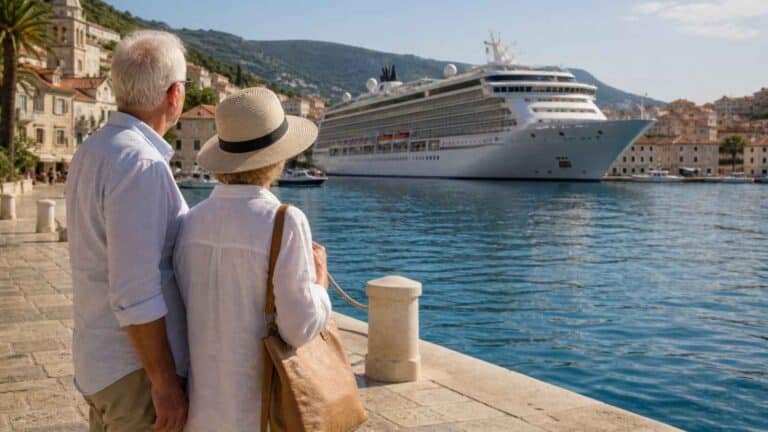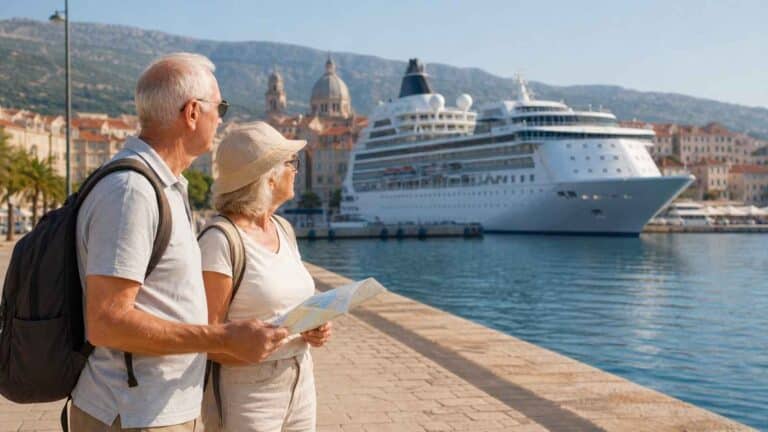

I’ve Taken 50 Cruises. This Is the Mediterranean Route I’d Pick for Seniors
My daughter Claire once spread a Mediterranean map across my dining table and began circling cities as if she were planning a small empire. Barcelona, Rome, Florence, Athens, Santorini, Dubrovnik, Venice. By the time she reached Istanbul, Margaret quietly moved the coffee cups out of danger.
Claire wanted to know which mediterranean cruise I would choose for a senior traveler who still loves history, food, and old stone streets, but no longer wants every day to feel like a forced march.
I’m Arthur Pendleton, 68 years old, a retired history professor, and the voice behind ElderTrip.com. My answer is simple at first: choose a 10 to 14 day route that begins or ends in Barcelona, includes southern France and coastal Italy, adds one carefully planned Rome or Florence day, and finishes with one or two Adriatic ports if possible.
The fuller answer is more useful. The Mediterranean is not one cruise. It is a collection of very different port days, some gentle, some glorious, and some that will test your knees before lunch.
In this guide
- Why this trip can work so well for seniors
- How Mediterranean cruise ports shape the whole trip
- Where Viking fits into Mediterranean planning
- The best itinerary pattern for most senior travelers
- What makes this region genuinely worth it for seniors
- How to choose the right cruise for your situation
- Mediterranean cruise comparison table
- Arthur’s master verdict
- Questions I’m often asked
Why this trip can work so well for seniors
A Mediterranean cruise can work beautifully for seniors because it lets you sample several major European destinations while unpacking once. The ship carries your room, meals, medicine cabinet, and afternoon nap from country to country.
That is no small thing. Land travel across southern Europe can mean train stations, luggage, stairs, taxis, hotel changes, and a fair amount of improvising in languages you may not speak. A ship removes much of that friction.
But do not let the easy ship fool you. The challenge is ashore. A mediterranean cruise for seniors succeeds when the ports, excursions, season, and ship all match your real walking comfort.
Kiplinger’s 2026 retiree cruise guidance highlights senior-friendly lines such as Holland America, Viking, Silversea, Cunard, and Oceania, and advises older travelers to book early, stay flexible, and check mobility accommodations. That is sensible advice, but I would add one more line in red ink: study the ports before you fall in love with the ship.
For the full senior-focused breakdown, see my guide to mediterranean cruise for seniors.
Comfort is the real luxury
At my age, I do not need to prove anything to a staircase. I want good guides, reasonable transfer times, shade when possible, and a return to the ship that does not feel like a small rescue operation.
The best trips leave enough energy for dinner. The lesser ones give you a grand photograph and a silent table because everyone is too tired to speak.
How Mediterranean cruise ports shape the whole trip
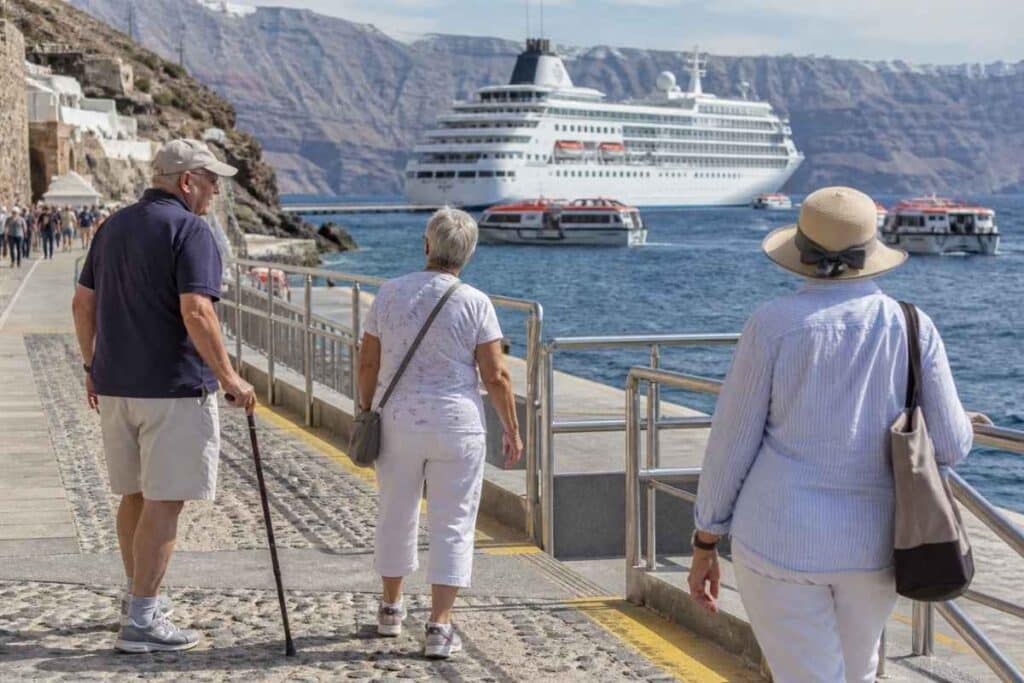
Mediterranean cruise ports decide whether the trip feels elegant or exhausting. The port name in the brochure is often not the place where the ship actually docks.
Rome usually means Civitavecchia. Florence usually means Livorno. Athens usually means Piraeus. Venice may involve Chioggia, Marghera, Ravenna, Trieste, or another regional arrangement depending on the itinerary. These details matter more than most brochures admit.
Port Mobility Civitavecchia explains that cruise passengers use shuttle services from the docks to the Largo della Pace service center, with a separate cruise to railway station shuttle available on ship days. That is useful infrastructure, but it also reminds us that Rome does not begin at the gangway.
Barcelona is easier for many travelers because the city and port are better connected. Port de Barcelona states that the Adossat pier has the T3 Portbus shuttle connecting cruise terminals with the city center, while World Trade Center terminals sit close to public transport.
Santorini is beautiful, but I treat it with caution. The official Santorini port authority says cruise ships anchor in the caldera, and visitors reach Fira by cable car, 587 steps, or local transport from the bay. That is a serious mobility question dressed as a postcard.
For the port-by-port planning lens, read my guide to mediterranean cruise ports.
My port test
Before I admire a port, I ask how I will move through it. Is there a tender? How far is the city center? Are there cobblestones, slopes, exposed ruins, or long bus transfers?
Margaret asks the better question: “Where do we sit if the day becomes too much?” That one question has saved more port days than any guidebook paragraph I have ever read.
Where Viking fits into Mediterranean planning
Viking can be an excellent Mediterranean choice for seniors who want a quieter adults-only ship, included cultural touring, and a destination-focused atmosphere. It suits travelers who prefer lectures, history, local food, and calm public spaces over casinos and loud pool decks.
Viking’s Icons of the Mediterranean itinerary page lists 11 days, eight guided tours, and four countries, and describes inclusive value items such as one complimentary shore excursion in every port of call, Wi-Fi, meals, beer and wine with lunch and dinner, port taxes and fees, enrichment lectures, and access to The Nordic Spa and Fitness Center.
That is attractive, especially if you dislike the feeling of being charged every time you turn around. Patricia Simms, a retired physician and one of the most practical travelers I know, once told me, “I don’t mind paying. I mind being pecked.” Viking’s model helps with that.
Still, Viking does not make the Mediterranean flat. Rome remains a long day from Civitavecchia. Athens still has heat and uneven surfaces. Santorini still has tenders, crowds, and vertical drama.
Viking’s health and accessibility FAQ says guests with disabilities or special needs should understand that access to some ports may be limited or impossible, and that crew do not provide personal care assistance. That is not a criticism. It is exactly the kind of plain fact seniors should know before booking.
For my line-specific assessment, see my guide to viking mediterranean cruises.
The included tour is not always the whole day
Viking’s included excursion can be a useful foundation, especially in a busy port. But if your entire reason for sailing is the Vatican Museums, Pompeii, Ephesus, or the Acropolis, read the optional excursions before final payment.
Included is helpful. Specific is better when a port really matters to you.
The best itinerary pattern for most senior travelers
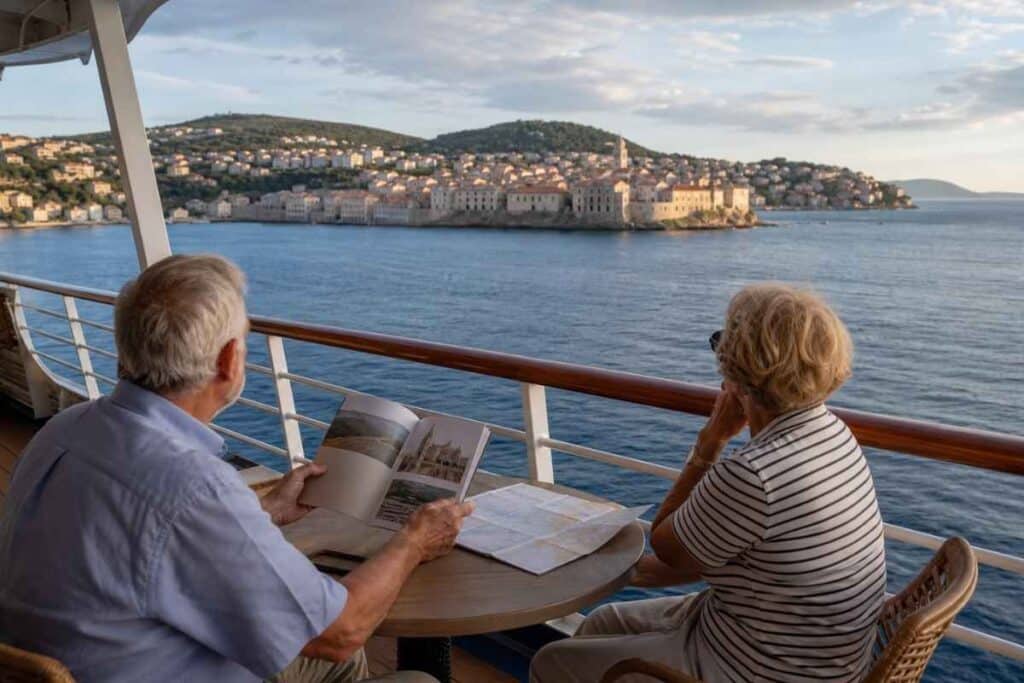
The best first Mediterranean itinerary for most seniors is a 10 to 14 day route with Barcelona, southern France, coastal Italy, one major long-transfer day, at least one sea day, and one or two Adriatic ports such as Dubrovnik, Split, or Kotor.
That pattern gives you variety without turning the trip into a checklist. You get architecture, food, Roman history, seaside towns, old walls, and enough breathing room to remember where you are.
Viking’s Mediterranean Odyssey is a useful example of the classic sweep, with 13 days, 10 guided tours, and six countries, including Barcelona, Marseille, Monte Carlo, Florence or Pisa through Livorno, Rome through Civitavecchia, Naples, Corfu, Dubrovnik, Split, and Venice or Chioggia.
I would not tell every senior to book that exact route. I would tell every senior to notice its rhythm. Spain, France, Italy, a sea day, and the Adriatic create a richer trip than seven consecutive famous cities with no room to breathe.
For a deeper route comparison, see my guide to best mediterranean cruise itinerary.
Choose one heroic day
Every Mediterranean cruise can afford one heroic day. Perhaps Rome. Perhaps Florence. Perhaps Athens. Choose the one that matters most, then build gentler days around it.
Do not stack five heroic days and call it value. That is not value. That is ambition with a dinner reservation.
What makes this region genuinely worth it for seniors
The Mediterranean is worth it for seniors because the region gives deep culture in short distances. A single voyage can bring you Gaudí in Barcelona, Roman memory in Italy, Greek history in Athens, and stone-walled towns along the Adriatic.
For a retired history professor, this is dangerous territory. I can stand in a port city and begin explaining Phoenicians, Venetians, Romans, Byzantines, and Habsburgs until Margaret gives me the look that says the gelato is melting.
But the real gift is not the lecture. It is the feeling of waking up near another chapter of the same old sea. The Mediterranean has carried merchants, armies, pilgrims, artists, refugees, sailors, and tourists for thousands of years. A cruise lets you touch that story without repacking every morning.
This is also why I prefer spring and fall for many seniors. May, early June, September, and October often make walking and sightseeing more pleasant than July or August. Heat changes everything: steps, hydration, patience, medication timing, and whether you still want to see one more church after lunch.
When a mediterranean cruise is too much
It may be too much if the itinerary has no sea days, several tender ports, July or August heat, and multiple long transfer cities in a row. None of those alone ruins a cruise. Together, they can drain the pleasure from it.
If mobility, balance, heart issues, or medication routines are part of your travel reality, ask your physician about strenuous summer touring before you book. A beautiful itinerary is not a medical plan.
How to choose the right cruise for your situation
Choose by matching the itinerary to your body first, your interests second, and the ship third. That order may sound backwards, but it is how older travelers avoid expensive disappointment.

If this is your first trip to the region, choose Western Mediterranean with a little Adriatic if possible. If you have already seen Rome and Florence, consider a deeper Adriatic route. If your heart is set on Greece, choose the season carefully and study tender ports before paying a deposit.
If you use a cane, walker, rollator, wheelchair, or scooter, ask the cruise line specific questions. Which ports tender? Which excursions avoid stairs? How far is the bus parking from the main sight? Are accessible cabins still available?
If you want calm, enrichment, and fewer children, Viking, Oceania, Holland America, Azamara, and smaller premium lines may be worth comparing.
My simple decision rule
First timer with decent mobility? Choose Barcelona, southern France, Italy, and Adriatic variety.
Mobility concerns? Choose fewer tender ports, fewer long transfers, and ship excursions for the difficult days. Repeat traveler? Consider the Adriatic or a focused Greek route in shoulder season.
Mediterranean cruise comparison table
This table is the practical version of the decision. It favors comfort, port rhythm, and senior usability over the number of countries collected.
| Option | Best for | Main strength | Main caution | Arthur’s senior verdict |
|---|---|---|---|---|
| Western Mediterranean | First time seniors | Barcelona, France, Italy, food, art, major sights | Rome and Florence require long transfers | Best first choice |
| Western Mediterranean plus Adriatic | Balanced cultural trip | Adds Dubrovnik, Split, Kotor, or Venice area texture | Can become port heavy | My favorite pattern if paced well |
| Greek islands | Views and island atmosphere | Santorini, Rhodes, Corfu, Crete, Mykonos | Tenders, steps, crowds, and heat | Beautiful, but less forgiving |
| Eastern Mediterranean | Ancient history lovers | Athens, Ephesus, Istanbul, Greek and Turkish history | Heat and walking intensity | Excellent with guided tours |
| Adriatic focused route | Repeat travelers and old town lovers | Compact cities, coastlines, layered history | Cobblestones and summer crowds | Underrated and often rewarding |
| Long grand voyage | Travelers with time and stamina | More countries and deeper regional sweep | Fatigue from repeated port days | Only with sea days and careful pacing |
Arthur’s master verdict
For most senior travelers, I would choose a 10 to 14 day Western Mediterranean route with Barcelona, southern France, coastal Italy, one major Rome or Florence day, at least one sea day, and one or two Adriatic ports.
I would choose Viking for travelers who want a quieter adults-only ship, included cultural touring, and a destination-first atmosphere. I would still read the port details carefully, because the Mediterranean is demanding no matter how calm the ship feels.
I would avoid July and August when possible, especially for travelers with heat sensitivity or mobility concerns. May, early June, September, and October are often kinder months for walking, touring, and patience.
I would treat Santorini, Rome, Florence, Athens, and Venice area ports as special planning days rather than ordinary stops. They can be magnificent. They can also take more energy than you expect.
So my plain answer is this: choose a mediterranean cruise for rhythm, not bragging rights. The right trip gives you history, food, sea air, and old cities without asking you to spend the final three days recovering from the first four.
Want tips like these every week?
Arthur & Margaret share honest cruise reviews, senior-friendly port guides, and exclusive deals — straight to your inbox. 2,000+ readers. No spam.
Questions I’m often asked
These are the questions I hear most often from readers trying to choose between several beautiful, confusing routes.
Is a Mediterranean cruise good for seniors?
Yes, if the itinerary is chosen carefully. The ship experience is usually comfortable, but port days can involve cobblestones, hills, tenders, long transfers, crowds, and summer heat.
What is the best Mediterranean route for first timers?
I would choose Western Mediterranean with a touch of Adriatic if possible. Barcelona, southern France, Italy, and Dubrovnik or Split give variety without being too specialized.
Are Viking Mediterranean cruises good for older travelers?
Yes, for many older travelers. Viking’s adults-only ships, included excursions, enrichment focus, and quieter atmosphere suit seniors who want culture more than spectacle.
Which Mediterranean ports are hardest for seniors?
Santorini, Civitavecchia for Rome, Livorno for Florence, and Piraeus for Athens often require more planning. The reasons include tenders, hills, long transfers, heat, crowds, and uneven surfaces.
When is the best time to cruise the Mediterranean?
May, early June, September, and October are my preferred months for many seniors. July and August can be hot, crowded, and tiring in stone cities and exposed ruins.
Should seniors book ship excursions in the Mediterranean?
Use ship excursions for long transfer ports, tender ports, and any day where missing the ship would be a serious worry. Independent touring can work in easier ports if you allow generous return time.
Is Santorini worth it for seniors?
It can be worth it, but it is not easy for everyone. Tendering, crowds, the cable car, steps, and steep terrain make Santorini a port to study carefully before booking.
How long should a Mediterranean cruise be?
For many seniors, 10 to 14 days is the useful range. Shorter cruises can feel rushed, while longer ones need sea days and gentler port rhythm to avoid fatigue.
The Mediterranean has a way of making travelers greedy. One more city. One more ruin. One more cathedral. Resist that gently. Leave space in the day for a shaded table, a simple lunch, and the pleasure of watching the old sea without hurrying past it.