Mediterranean cruise for seniors: what I would check before booking
Robert Whitmore called me after finding a glossy Santorini brochure at his travel agent’s office. he walks with a stick, has arthritis in both hands, and still believes ancient stone looks better in person than on television. I agree with him on that last point.
He wanted to know whether a Mediterranean cruise for seniors was a sensible trip or a romantic mistake. I told him it could be one of the finest ways to see Europe, provided he chose the ports and pace with more care than the brochure had shown him.
I’m Arthur Pendleton, a retired history professor who has spent more than 12 years cruising. at ElderTrip.com, I look at the part of a journey that tends to arrive after the pretty photograph: the walk from the ship, the bus line, the heat, and whether there is a bench when you need one.
In this guide
- When Robert learned to choose ports before ships
- Why a Mediterranean cruise for seniors begins ashore
- When the western Mediterranean gave Robert room to breathe
- When the famous ports asked for more planning
- The five mistakes that can turn a port day into recovery time
- Arthur’s verdict
- Questions I’m often asked
When Robert learned to choose ports before ships
The first decision is not the cruise line. it is whether the ports match your walking comfort, heat tolerance, and patience for transfer days.
Robert had started with the ship’s dining room and balcony photos. I asked where the ship would actually dock, then watched him pause over the itinerary. that little pause saved us from treating an ambitious route like an easy holiday.
Here’s what the booking websites won’t tell you. the ship may be calm, air conditioned, and full of elevators, but difficulty often begins after breakfast when the gangway leads to cobblestones, buses, tenders, hills, or a city far from the harbor.
Rome is the classic example. cruise ships use Civitavecchia, not central Rome. Port Mobility Civitavecchia explains the dock shuttle options, including the connection to Largo della Pace and the train station service on ship days.
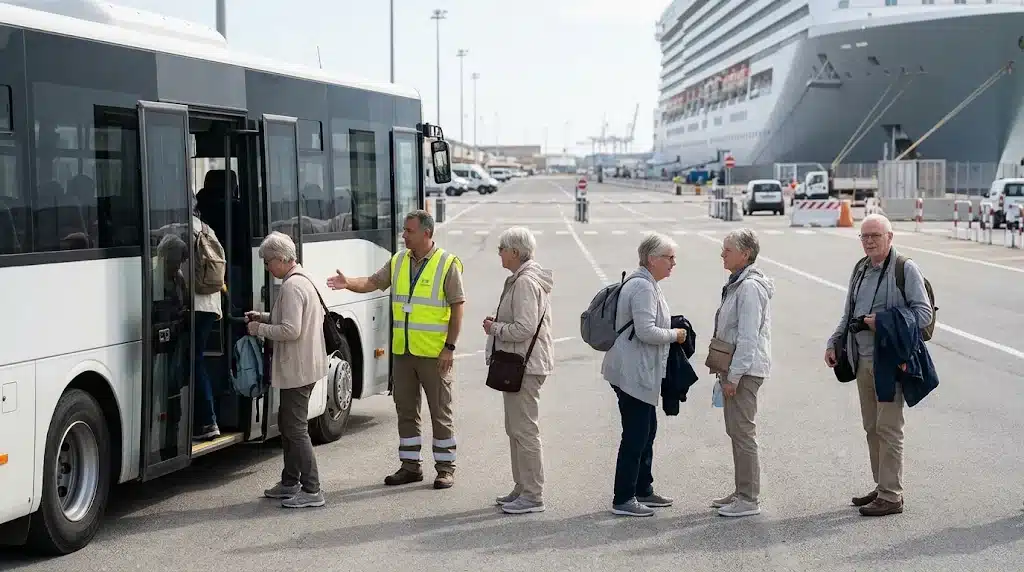
Rome is magnificent, but it is a long day before you reach the first church, museum, or piazza. Robert did not cross it off his list. he simply marked it as a guided day, which is a much better use of a red pen.
For the broader route decision, my guide to mediterranean cruise explains how the regions differ before you settle on a ship. this article stays with Robert’s question: will the actual days ashore feel manageable?
A beautiful port can still be a hard day
I have learned to separate beauty from ease. Santorini may be one of Europe’s great views, but it can also mean tendering, crowds, steep movement from the water, and a hot wait when several ships arrive together.
Robert looked at the island photograph again and said he still wanted to go. fair enough. I told him to book the ship’s excursion, ask about tender access before paying, and let the cable car line decide how much of the day belonged to him.
Why a Mediterranean cruise for seniors begins ashore
A Mediterranean cruise for seniors works best when the itinerary gives you manageable ports, clear activity levels, and a way back to the ship without a small drama. a good cabin helps, but the port mix decides whether you return to dinner pleased or merely relieved.
By the time Robert and I had spoken twice, he was no longer asking which ship had the largest theater. he was asking how many port days came in a row, whether there would be a sea day, and what a moderate walking tour actually meant. now we were having the useful conversation.
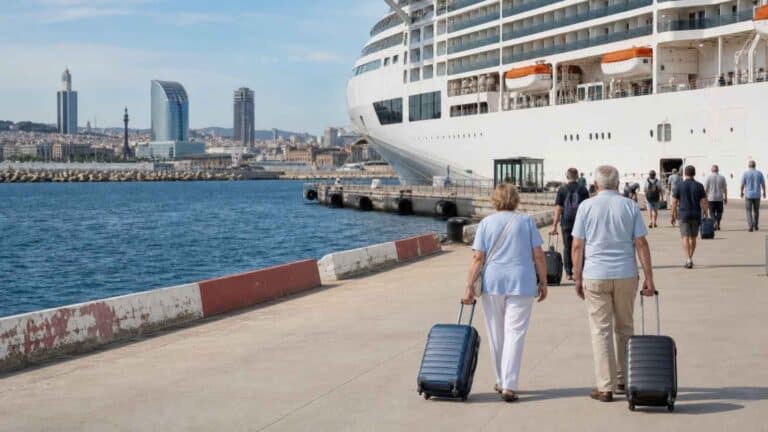
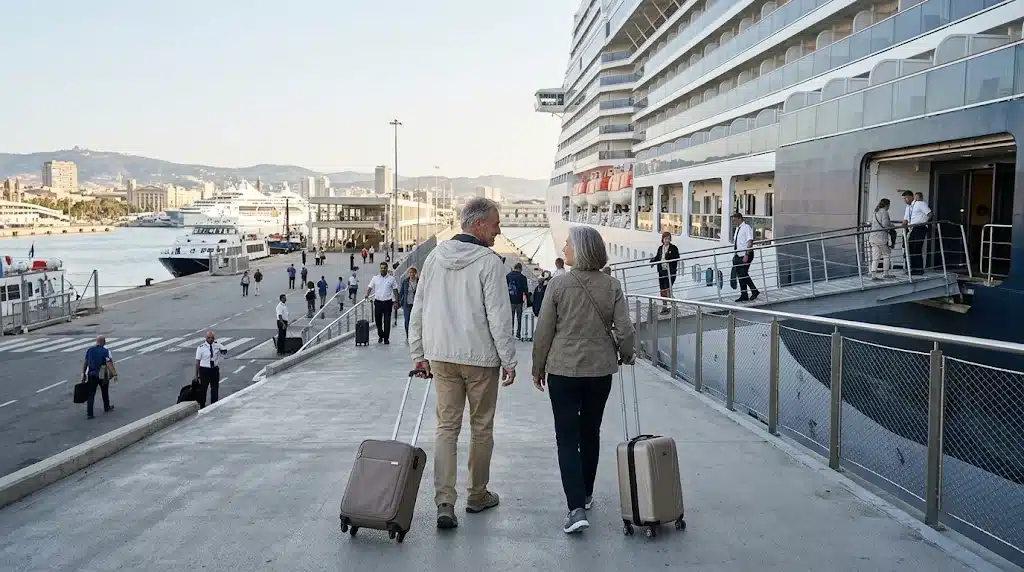
Barcelona is one of the easier major embarkation cities when you plan it well. Port de Barcelona outlines transport from its cruise terminals, including the T3 Portbus from Adossat pier and the close public transport connections at World Trade Center terminals.
That practical connection matters more than most sales copy admits. a senior-friendly itinerary is not about collecting famous names. it is about how much effort lies between the ship and what you came to see.
Mediterranean cruise comfort test
We gave every port the same five questions: how far is the main sight from the dock, is there a tender, are streets steep or uneven, is shade likely, and can he return to the ship easily if the day becomes too much? it took five minutes per port.
If two or three answers worried him, that stop became a ship excursion day rather than an independent wandering day. pride is a poor substitute for a reliable bus and a guide who knows the nearest restroom and bench.
When the western Mediterranean gave Robert room to breathe
For many first-time senior cruisers, the western Mediterranean is the gentler starting point. Spain, southern France, and selected Italian stops often balance history, transport, and sensible shore days better than an itinerary stacked with tender ports.
Robert liked Barcelona immediately because it felt like a real city before it felt like a cruise logo. it has airport access, hotels, taxis, and enough to see without rushing from one famous sight to the next.
I would arrive at least a day early, preferably two when the flight is long. jet lag and embarkation stress are poor traveling companions, and no sensible person wants to begin a Mediterranean cruise by sprinting through an airport.
Southern France can work beautifully when the coach routes are reasonable. Italy is extraordinary, but it requires honesty about distance: Livorno for Florence or Pisa, Civitavecchia for Rome, and Naples for Pompeii or the Amalfi Coast all ask more of a day than their port names suggest.
For the port-by-port version of that decision, see my guide to mediterranean cruise ports. it compares the major stops more directly by walking difficulty and transfer stress.
The route mix I would choose first
If Robert asked me to make the final choice, I would favor Barcelona, a southern France stop, one carefully planned Italian day, and at least one sea day. that gives a traveler room to absorb the history rather than race through it.
Tom once showed me a route with Rome, Florence, Naples, Athens, Santorini, and Dubrovnik packed into one week. I told him it looked less like a cruise and more like a final examination with better desserts.
| area | best for | comfort advantage | main caution | Arthur’s view |
|---|---|---|---|---|
| Western Mediterranean | first-time senior cruisers | strong infrastructure and varied excursions | long Italian transfers | best first choice |
| Greek islands | scenery and island atmosphere | memorable views and shorter calls | tenders, steps, heat, and crowds | choose carefully |
| Adriatic | history and compact old towns | walkable centers near many ports | cobblestones and summer crowds | good with pacing |
| Eastern Mediterranean | ancient history and culture | remarkable sites and rich guided touring | heat and walking intensity | best with guided tours |
When the famous ports asked for more planning
The harder ports are not bad ports. they are simply places where beauty arrives with steps, crowds, tenders, heat, or a long ride from the dock.
Santorini is the obvious caution, and Robert knew why the moment he read the word tender. Athens can be tiring in summer, particularly if the day includes the Acropolis. Dubrovnik is glorious, but polished stone and crowding can make the old town more demanding than its photographs let on.
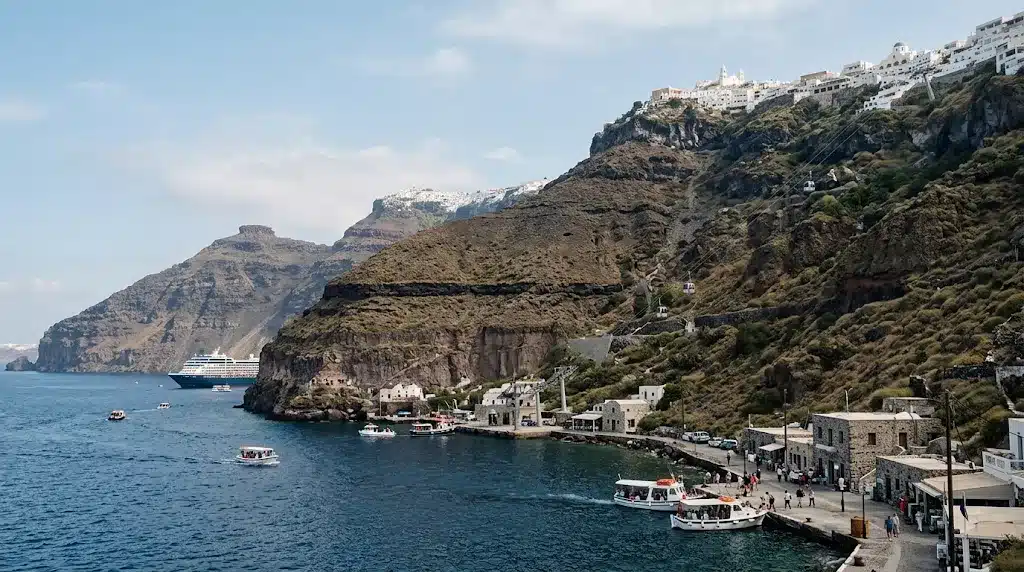
Piraeus gives you access to Athens, not an easy stroll to it. Venice-related itineraries need similar attention because the actual port can be Ravenna, Trieste, Marghera, or another regional stop. always read the port name, not just the city printed in large friendly letters.
Heat changes the whole calculation
Do not treat heat as a small discomfort. it changes walking distance, stair tolerance, hydration, medication timing, and the patience of perfectly nice people.
Margaret, who spent decades as a nurse, is firm on this point. if heart, balance, or medication concerns are part of your travel planning, consult your physician before booking a strenuous summer excursion. I am a history professor, not your doctor, and old ruins are not worth pretending otherwise.
The five mistakes that turn a port day into recovery time
The common mistakes happen before the ship ever sails. Robert avoided most of them once he stopped judging an itinerary by the number of famous cities printed across the front.
The first mistake is choosing the route with the most celebrated names. Rome, Florence, Athens, Santorini, Dubrovnik, and Istanbul can make a glorious map and an exhausting week.
The second is underestimating transfer time. a port may share a city’s name in the brochure while the ship docks far outside it. Civitavecchia for Rome is the warning label I wish every itinerary printed in larger type.
The third is booking independent excursions without a generous return margin. traffic, crowds, tender delays, and heat can all slow the day. a cheaper tour is no bargain if you spend the afternoon watching your wristwatch instead of the cathedral.
The fourth is assuming activity labels mean the same thing everywhere. a moderate walk in Barcelona may feel entirely different from a moderate walk in Dubrovnik or Athens. ask about stairs, standing time, rest stops, and how far the bus parks from the actual sight.
The fifth is packing shoes for dinner instead of ports. bring supportive walking shoes with grip. the Mediterranean has spent several thousand years arranging marble, stone, slopes, and uneven pavement to humble a stylish traveler.
Arthur’s verdict
A Mediterranean cruise for seniors can be one of the most rewarding ways to see Europe, but comfort should beat bragging rights every time. I would choose fewer heroic port days, at least one sea day, and a line that treats shore time as more than an advertising photograph.
For most first-time travelers, I would start in the western Mediterranean from Barcelona or Rome, add France and coastal Italy, and reserve one or two ambitious days for the places that matter most. I would save a Greek-island-heavy route for travelers comfortable with tenders, steps, heat, and a little uncertainty.
Robert did not give up Santorini. he chose a conservative excursion, protected his sea day afterward, and accepted that seeing part of a great place well was better than seeing all of it exhausted. that is the sensible route I would recommend.
Questions I’m often asked
These are the questions I hear over dinner from travelers who want Mediterranean culture without turning their vacation into a forced march.
Is a Mediterranean cruise good for seniors?
Yes, when the itinerary is chosen honestly. life on the ship is usually the easy part, while ports can bring cobblestones, hills, tenders, long transfers, and summer heat.
Which Mediterranean route is easiest for older travelers?
I would generally start with the western Mediterranean. Barcelona, southern France, and selected Italian stops offer strong infrastructure and fewer tender-dependent days than many Greek-island routes.
Are Greek island cruises hard for seniors?
Some can be. Santorini, Mykonos, and other islands may involve tenders, slopes, steps, and crowds. they can still be wonderful, but I would not choose them casually for someone with mobility concerns.
What is the best month for a Mediterranean cruise?
For many seniors, May, early June, September, and October are more comfortable than peak summer. walking is usually easier when the heat is kinder and crowds are smaller.
Should seniors book ship excursions or independent tours?
Use ship excursions for long-transfer ports, tender ports, and any day where missing the ship would cause real worry. independent tours can work well in easier ports when you build in plenty of time to return.
A Mediterranean cruise for seniors is at its best when it gives you history without haste. choose the ports carefully, respect the heat, and leave room for water, shade, and the small pleasure of not rushing past what you came to see.