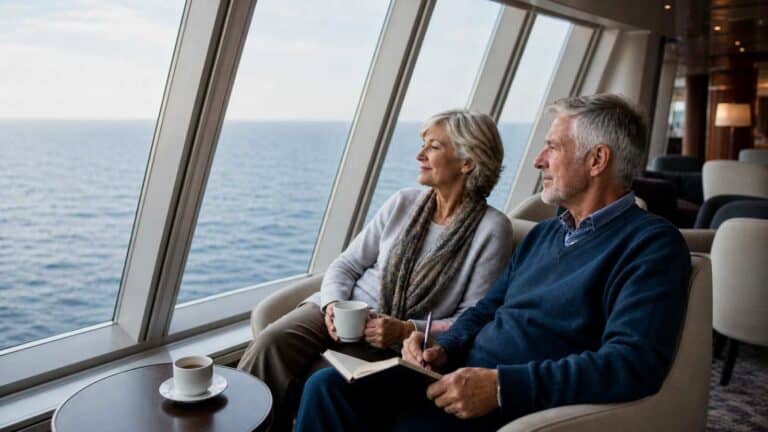

Small Ship Cruises: Why Fewer Passengers = Better Destinations
My colleague harold spent 40 years on mega-ships. ten thousand people. buffets. casinos. crowds everywhere.
At 70, someone convinced him to try a small ship cruise. 150 passengers. the ship docked right in the heart of dubrovnik’s old port.
He could actually see the city.
He came back changed: “i never want to go back to a mega-ship. small ship cruise lines go where the big ships can’t.”
He was right.
I’ve now sailed small ship cruise lines across southeast asia and europe. i understand what harold discovered: small ship cruise lines aren’t just smaller. they’re fundamentally different.
Here’s exactly what you need to know about small ship cruise lines and whether they’re right for you.
in this guide:
What makes the best small ship cruise lines different
Small ship cruise lines create a cascade of consequences from their size alone. start small and everything else follows.
A mega-ship needs massive ports to dock. that narrows where you can go. cozumel can handle 5,000 passengers. half moon cay can handle 5,000. the same fifteen ports get hit repeatedly because they’re the only ones built for ships that big.
A small ship with 200 passengers can anchor in a cove you’ve never heard of. it can dock at small fishing villages. it navigates rivers and narrow fjords that mega-ships physically can’t fit through.
Harold’s second cruise went through norwegian fjords where the ship was so close to the cliff face, you could see individual trees. that doesn’t happen on a 1,000-foot-long ship.
Service is different too. on a mega-ship, you’re one of 2,000. your cabin attendant manages 40 rooms. the dining room hosts 800 people per seating.
On a small ship, staff outnumber passengers almost equally. your attendant knows your name. your table has six people you see every night, not 1,800 strangers. the captain knows who you are.
Community forms naturally on small ships. you bump into the same people at breakfast, at the bar, on deck. by day three, you’re friends with a half-dozen couples. by day seven, you’ve learned their life stories.
The cruise lines international association (clia) defines small ship cruises by three characteristics: passenger capacity (typically 100-500 guests), shallow-draft vessels, and expedition-grade navigation systems.
The shallow draft allows small ships to anchor in remote locations, river mouths, and protected coves inaccessible to ocean-going cruise ships.
Passenger-to-crew ratios typically range from 1:1.5 to 1:2, compared to 1:4 or 1:5 on mega-ships. that ratio fundamentally changes service quality and how the crew treats you.
That’s what harold discovered. not a smaller cruise. a completely different experience.
Best small ship cruise lines

These small ship cruise lines are organized by what they’re actually best at, not trying to rank them overall. one person’s perfect small ship is another person’s compromise.
| Cruise line | Best for | Ship size | Price range |
|---|---|---|---|
| Lindblad expeditions | Alaska, galapagos, antarctica. expert naturalists. real exploration. | 48-100 passengers | $7,000-$15,000/week |
| Uncruise adventures | Alaska, small budget, hands-on adventure. very intimate. | 40-86 passengers | $3,500-$7,000/week |
| Windstar cruises | Mediterranean, caribbean, luxury small ship. elegant. | 148-300 passengers | $4,500-$8,500/week |
| Azamara | Destination-focused. more ports than bigger ships. good value. | 650-700 passengers | $2,500-$5,500/week |
| American cruise lines | Us river and coastal. american rivers: mississippi, columbia, snake. | 100-170 passengers | $3,500-$6,500/week |
| Aurora expeditions | Antarctica, arctic. australian-based. very expedition-focused. | 50-200 passengers | $8,000-$18,000/week |
What each line actually delivers
Lindblad expeditions has been doing this for 40 years. they pioneered expedition cruising. your naturalists are phd-level specialists. you’re not just going to galapagos. you’re understanding galapagos at a depth you’ll never get on a mega-ship.
Uncruise is the budget option, but “budget” doesn’t mean low quality. it means smaller crews, more participation from passengers. you might help pull the kayak aboard. you’re active in the experience, not passive.
Windstar is the luxury small ship option. more amenities, more elegance, better food than expedition lines. fewer passengers than azamara but higher price.
Azamara is the sweet spot for people who want small ship benefits without the premium price or expedition intensity. 650 passengers is borderline, bigger than true small ships but still small enough to access ports mega-ships can’t.
More ports than bigger ships, lower cost than pure luxury. if you want that balance, azamara is worth a hard look.
This video walks through what small ship cruising actually feels like, compared to what most people expect. worth watching if you’ve only sailed big ships.
Small ship cruise lines vs. other options: when to choose
Small ship cruise lines aren’t better than river cruises or luxury liners. they’re different. here’s how to think about it.
- Small ships vs. river cruises: river cruises (like the rhine or danube) are all-inclusive, destination-driven, and limited to rivers. small ocean ships are more flexible, can reach remote places (alaska, antarctica, galapagos), but usually don’t include drinks and excursions. budget accordingly.
- Small ships vs. mega-ships: mega-ships offer more onboard amenities, cheaper per-day costs, more entertainment options. small ships offer destinations, intimacy, and a sense of exploration. choose mega-ships if you want to stay on board more. choose small ships if you want to leave the ship and actually see things.
- Small ships vs. luxury liners: luxury liners (regent, silversea) offer all-inclusive pricing and premium service on ships with 400-700 passengers. small ships often cost less but require more budgeting for extras. if you want guaranteed luxury service with all-inclusive meals, go luxury. if you want adventure and destination access at lower cost, go expedition small ship. i’ve covered this tradeoff in detail in my guide to luxury cruise lines.
Small ocean ships typically operate on three pricing models.
Expedition-focused ships offer limited amenities but naturalist expertise, usually $4,000-$8,000 per week including most meals. luxury-small ships offer premium service and specialty dining, typically $5,000-$10,000 per week. destination-focused ships offer moderate luxury with extensive port time, around $2,500-$5,500 per week.
Costs vary by region. alaska and expedition vessels command premiums over caribbean small ships due to specialized equipment like zodiac boats, expedition gear, and naturalist staff.
The honest answer: harold chose small ships because he wanted to go places, see things, and feel connected to other travelers. if you’re the same, small ships deliver. if you want to lounge on deck, watch shows, and hit main ports affordably, mega-ships are smarter.
Want tips like these every week?
Arthur & Margaret share honest cruise reviews, senior-friendly port guides, and exclusive deals — straight to your inbox. 2,000+ readers. No spam.
Arthur’s verdict on small ship cruise lines

What harold discovered about small ship cruise lines is something many travelers never realize: there’s a whole category of cruiser who doesn’t even know these ships exist.
If you’ve sailed mega-ships and felt like you weren’t actually seeing anything, just ports crowded with other cruise ships’ passengers, then small ships will feel like a revelation.
If you’re the type who reads travel history, wants context about where you’re going, and would rather spend eight hours exploring a small coastal town than six hours at the beach, small ships align perfectly with how your mind works.
The tradeoff is real: fewer onboard amenities, usually more active itineraries, and higher per-week costs once you budget everything.
But you access places no mega-ship can reach. you meet eight people you genuinely like instead of 2,000 you pass anonymously. you feel like you’re actually traveling, not floating through tourist locations.
Here’s my honest recommendation: if you’re 65 or older and want to cruise, try a small ship at least once. pick an expedition that matches your energy level.
Alaska works for people with moderate mobility. galapagos requires more physical engagement. antarctica is serious adventure territory.
Harold? he’s already booked his third small-ship cruise. sometimes retirement unlocks the traveler you didn’t even know you wanted to be.
For the complete guide comparing all cruise line types and how they fit into your travel priorities, see my full cruise line rankings.
Questions I’m often asked
Do small ships rock more than big cruise ships, and are they still safe in rough seas?
Smaller vessels can feel more motion in rough seas than mega-ships. but they’re built specifically for the regions they operate in. alaska ships handle alaska conditions. antarctica ships handle polar seas. yes, you’ll feel the motion more. but safety is equal or better. smaller ships can navigate around storms and access protected anchorages mega-ships can’t use.
How active are small ship cruises, and which lines suit different fitness levels?
It depends on the line. lindblad and aurora expeditions involve active hiking and zodiac landings, good for moderate fitness. uncruise can be quite active (kayaking, hiking). windstar and azamara are less active, more port time, relaxed onboard. choose the line based on your actual fitness level. honest operators let you know up front.
How much do expedition small ship cruises cost, and are they worth it?
Expedition ships can run $5,000-$8,000 per person per week. that’s more than a mega-ship. but you’re seeing things and visiting places no mega-ship reaches, so it’s not an apples-to-apples comparison. budget for the actual experience, not just the baseline cost.
Are small ship cruises the same as luxury cruises, or do they focus on different things?
Some overlap: seabourn operates small ships with 200-300 passengers in luxury territory. but typical small ships emphasize destination and exploration. typical luxury lines emphasize service and all-inclusive pricing. read the specifics carefully. “small ship” and “luxury” aren’t mutually exclusive, but they prioritize differently.