
River Cruise for Seniors: Best Lines, Rivers & Tips for 2026
I took my first river cruise in 2013 because Margaret and I wanted retirement to begin with something better than rearranging the garage. A colleague suggested the Danube, and I booked it with more optimism than knowledge.
That first morning near Vienna, I stood on the sun deck with coffee in one hand and a guidebook I had barely opened in the other. I remember thinking that a river cruise for seniors might be the rare travel format that removes more stress than it adds.
I am Arthur Pendleton, a retired history professor and the founder of ElderTrip.com. After 50 plus voyages over 12 years, including the Danube, Rhine, Seine, Douro, Mekong, Nile, and Mississippi, I have a fairly simple conclusion: river cruising can be marvelous for older travelers, but only if you choose the right river, line, cabin, season, and pace.
Why river cruising works so well for seniors
A river cruise works well for many seniors because it removes the hardest parts of independent travel. You unpack once, sleep in the same cabin each night, and wake up close to the places you came to see.
Let me be direct about this. The blessing of river cruising is not luxury. It is simplicity.
Most river ships carry roughly 100 to 200 passengers, depending on the line and ship. That size changes the entire feeling of travel. Corridors are shorter, dining rooms are calmer, and staff usually learn your name before the week is half over.
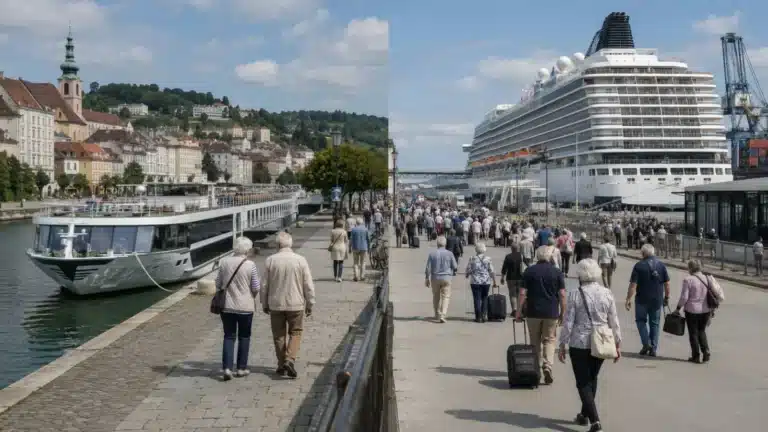
The docking matters too. On many European river itineraries, the ship docks near the historic center rather than at a distant commercial port. You walk down the gangway and you are already close to the reason you came.
That does not mean river cruising is effortless. Shore excursions still involve walking, cobblestones, museum steps, uneven pavement, and occasional hills. But compared with packing every two nights and wrestling with train stations, it is a gentler way to see several places in one trip.
Is a river cruise for seniors right for you?
A river cruise for seniors is right for you if you value destinations, calm evenings, guided touring, and a smaller ship. It may not be right if you want casinos, big stage shows, water slides, or a different restaurant every night.
Here is what I used to tell my students, and what I will tell you now: define the thing before you buy the thing.
- Do you care more about places than onboard entertainment? River ships are built around ports, culture, scenery, and conversation. They are not floating resorts.
- Can you walk at least some distance most days? Many excursions involve one to three miles of walking, though some lines offer gentler options.
- Do you enjoy a smaller social setting? A river ship is intimate. If you prefer anonymity, it may feel too close.
- Are you comfortable paying more upfront? River cruises often cost more than mainstream ocean cruises, but many include excursions, meals, Wi-Fi, and some drinks.
If you answered yes to most of those, this format deserves your attention. If you are still comparing different styles of cruising, start with the broader ElderTrip cruise types guide before you choose a river.
The best rivers for a first senior cruise
The river matters more than most first-time travelers realize. It shapes your walking difficulty, scenery, port access, cultural rhythm, and comfort level.
Don’t let the marketing fool you. The prettiest brochure is not always the easiest trip.
| River | Best for | Typical terrain | Arthur’s first-timer verdict |
|---|---|---|---|
| Danube | History, music, first river cruise | Mostly manageable city walking | Best first choice for most seniors |
| Rhine | Castles, wine towns, scenery | Some cobblestones and hills | Excellent if mobility is good |
| Seine | Paris, Normandy, art, history | Generally moderate | Very good first choice |
| Douro | Wine country and scenery | Hilly in several places | Better for active seniors |
| Mekong or Nile | Bucket-list travel | Variable and more complex | Best after one European sailing |

My usual recommendation is the Danube. Vienna, Budapest, and Bratislava are culturally rich without being punishing, and the Wachau Valley gives you one of the great river views in Europe without requiring heroic knees.
The Rhine is also wonderful, but it asks a little more of you. Wine towns and castle country often come with cobblestones, slopes, and steps. Margaret calls it beautiful with a footnote, which is her polite way of saying wear the right shoes.
Which river cruise lines seniors should compare
The best river cruise line for seniors depends on what you need most: price clarity, excursion variety, cabin design, solo value, or accessibility. There is no single winner for every traveler.
Here is what the booking websites won’t tell you. The cheapest fare is not always the lowest real cost, and the most expensive fare is not always the most comfortable fit.
Viking
Viking is the name most Americans recognize first, and for good reason. Viking’s own corporate materials describe a large European river fleet, including 80 river ships, and its ships are designed around destination-focused travel rather than resort-style entertainment.
For seniors who want calm, consistency, and a familiar booking process, Viking is a sensible line to compare. Just calculate gratuities, optional excursions, transfers, and drinks outside mealtimes before deciding that the base fare tells the whole story.
AmaWaterways
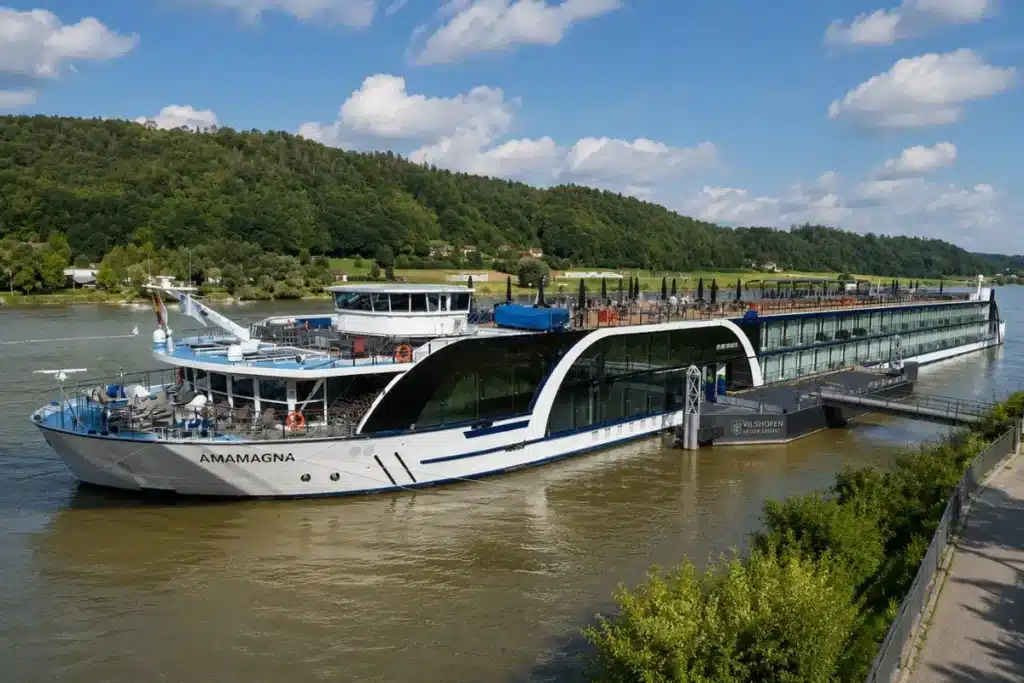
AmaWaterways is often strong for seniors who want excursion choice. Its FAQ explains that European excursions may be offered at different activity levels, including gentle, regular, and active walking groups.
That matters. A gentle-walking option can be the difference between seeing a city comfortably and spending the afternoon quietly resenting your own knees.
Avalon Waterways
Avalon is worth serious attention for cabin design and solo value. Its solo traveler materials say it waives single supplements on most Europe departures and select Southeast Asia sailings, though exact availability should always be checked for your date.
I also like Avalon’s open-air cabin concept because it avoids the step-over balcony threshold found on many ships. That is not glamorous. It is practical, and practical becomes beautiful after 70.
Uniworld
Uniworld usually appeals to seniors who want a more inclusive and boutique-hotel feeling. The decor is richer, the service style is warmer, and the fare structure often includes more than mainstream lines.
I would not call it inexpensive. I would call it worth comparing carefully if you dislike signing chits, calculating gratuities, and wondering what will appear on the final bill.
Scenic
Scenic belongs on the shortlist for seniors who want a premium, more inclusive river cruise experience. It is also one of the first lines I would investigate if accessible cabin details are a major concern.
Notice the word investigate. Accessible cabin features vary by ship and itinerary, so confirm door widths, shower setup, lift access, and deck access in writing before you book.
If you are comparing premium lines beyond river cruising, I explain that decision in more detail in my luxury cruise lines guide.
What seniors should confirm before booking
The right river cruise is chosen before the deposit is paid. The wrong one is discovered on day three, usually at the bottom of a hill.
This is the one thing I wish someone had told me. Ask boring questions early.
Accessible cabins
If you need an accessible cabin, start there. Not with the river. Not with the price. Not with the pretty itinerary map.
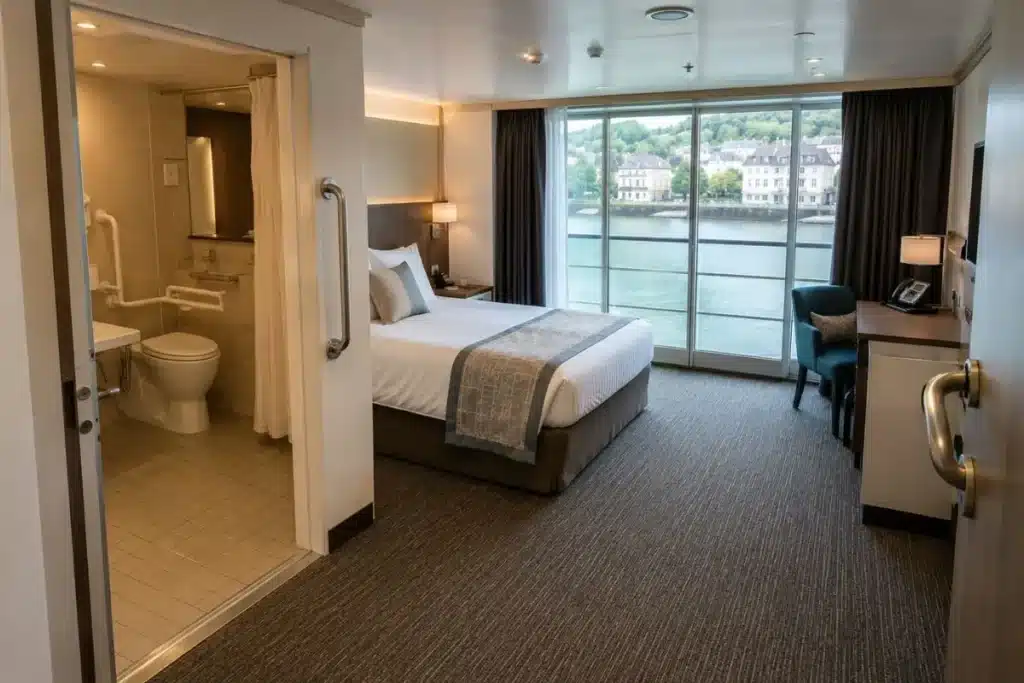
River ships have limited accessible cabin inventory, and those cabins can sell quickly on popular routes. The State Department’s accessibility advice is a useful reminder to confirm details before you travel, so ask the cruise line or travel advisor for the exact ship name, cabin number, bathroom layout, door width, shower design, lift access, and whether every deck is reachable without stairs.
Medical needs
Many river ships have limited onboard medical support rather than a full clinic. That is not a criticism. It is simply the reality of a small vessel.
If you travel with medication that needs refrigeration, ask whether your cabin refrigerator is appropriate or whether medical storage is available. Carry extra medication, keep prescriptions photographed on your phone, and buy travel insurance with medical evacuation coverage.
Airport transfers
The most tiring part of a river cruise often happens before you see the river. Flying overnight, collecting luggage, finding a driver, and locating a ship in an unfamiliar city can wear down even a healthy traveler.
I usually recommend the cruise line transfer for embarkation and disembarkation days. It costs more than improvising, but on those two days, certainty has value.
River cruise for seniors over 60: what changes with age
A river cruise for seniors over 60 can become more attractive with age because the format reduces logistics. What changes is not the appeal. What changes is the amount of pre-booking homework.
A healthy 62-year-old may only need to check excursion pace. A 76-year-old with arthritic knees should check terrain, coach alternatives, cabin layout, and how far the ship docks from the town center.
Robert Whitmore, whom Margaret and I met on the Rhine in 2014, walks with a stick and has very little patience for vague accessibility language. His rule is better than mine: if they cannot explain the walking in plain English, do not book it yet.
That is good advice. Ask how long you will stand, whether there are benches, whether cobblestones are involved, and whether the gentle group is truly gentle or merely slower than the active group.
Solo river cruises for seniors
River cruising is one of the better formats for solo seniors because the ship is small, meals are social, and excursions give you an easy reason to talk with people. You do not have to manufacture companionship.
The short answer is yes. The longer answer is more interesting.
The main obstacle is the single supplement. Tauck has announced 2026 savings for solo travelers on European river cruises, including no single supplement on Category 1 riverboat cabins. Avalon also promotes waived single supplements on many Europe departures, though dates and cabin types vary.
My neighbor Dorothy took her first solo river cruise after losing her husband. She worried about dinners most of all. By the third night she had two regular walking companions, one bridge partner, and a firm opinion about German Riesling.
That is river cruising at its best. It gives you structure without making you feel managed.
When to book a river cruise
The best time to book depends on whether you need a specific cabin, a popular route, a solo fare, or a spring or fall departure. For most seniors, six to 12 months ahead is a sensible starting point.
I prefer September. The weather is usually kinder than July, the crowds are thinner, and the light on the river has the courtesy to behave like it knows you brought a camera.
Late April, May, September, and early October are often the most comfortable months for European river cruising. July and August can be hot and crowded. March can be appealing, but early spring water levels can occasionally affect itineraries.
If you need an accessible cabin, book earlier. If you are chasing a solo supplement waiver, watch offers closely and be flexible. If you want the Danube in September, do not wait until summer and expect the best cabins to still be waiting politely for you.
What a river cruise usually costs
A seven-night European river cruise can vary widely in price depending on the line, season, cabin, itinerary, and inclusions. The only honest way to compare is to calculate the total trip cost, not just the fare on the first screen.
Look beyond the headline fare. Add gratuities, transfers, optional excursions, drinks outside included meals, travel insurance, flights, pre-cruise hotels, and any mobility support you may need.
Some lines look expensive because they include more. Others look affordable until the extras gather around the fare like relatives at Thanksgiving.
My practical advice is simple: make a one-page cost sheet for every line you are considering. Gene, a retired engineer I know, built a spreadsheet for this. I teased him for it, then quietly asked for a copy.
Arthur’s verdict
A river cruise for seniors is not a lesser version of independent travel. Done well, it is one of the most civilized ways to see several meaningful places without turning the trip into a logistics contest.
For a first sailing, I would start with the Danube or Seine. I would compare Viking, AmaWaterways, Avalon, Uniworld, and Scenic honestly, based on your walking ability, budget, cabin needs, and tolerance for extra charges.
If mobility is a concern, solve the cabin and excursion questions before falling in love with an itinerary. If you are traveling solo, look for reduced or waived single supplement offers before choosing your exact date.
Most of all, do not treat a river cruise as a trophy trip. Treat it as a fit question. The right one will feel calm, clear, and deeply rewarding. The wrong one will feel like an expensive pair of shoes in the wrong size.
Want tips like these every week?
Arthur & Margaret share honest cruise reviews, senior-friendly port guides, and exclusive deals — straight to your inbox. 2,000+ readers. No spam.
Questions I’m often asked
What is the best river cruise for seniors?
For most first-time seniors, I would start with a Danube cruise on a line such as Viking, AmaWaterways, or Avalon. The route is culturally rich, generally manageable, and well established for American travelers.
Are river cruises good for seniors with limited mobility?
They can be, but you must confirm the exact ship, cabin, excursion pace, and port terrain before booking. Mild to moderate mobility limitations are often manageable. Full-time wheelchair use requires much more careful planning.
How much walking is required on a river cruise?
Many days involve one to three miles of walking, sometimes over cobblestones or uneven pavement. Lines such as AmaWaterways may offer gentle walking groups in Europe, but you should confirm the options for your specific itinerary.
What is the best time of year for a senior river cruise?
My favorite months are May, September, and early October. They usually offer better walking weather than midsummer and fewer crowds than the busiest travel weeks.
Should seniors buy travel insurance for a river cruise?
Yes. I consider comprehensive travel insurance with medical evacuation coverage essential for senior river cruise travelers. River ships are small, and serious medical care usually happens ashore.
How far ahead should I book?
Six to 12 months ahead is sensible for popular European routes. Book earlier if you need an accessible cabin, a specific solo fare, or a prime spring or fall departure.
If your first river cruise teaches you anything, let it teach you this: comfort is not the enemy of discovery. At our age, comfort is often what makes discovery possible. Choose carefully, ask plain questions, and give the river a chance to do what it does best, which is carry you into places you might not have reached quite so easily on your own.