
Why Cruise Planning Starts Feeling Harder After 60
For many older travelers, the decision gets harder once cost, walking comfort, cabin fit, and medical readiness all start affecting the same trip.

By Arthur Pendleton
June 20, 2026

There was a time when cruise planning felt fairly simple.
You looked at the itinerary, compared a few dates, checked the fare, and made a decision.
But for many older travelers, that version of planning does not last forever.
At some point, the trip starts involving more than one easy question. Real cost, walking comfort, cabin fit, medical preparation, travel insurance, and booking pressure all begin to affect the same decision at once.
Why It Feels Harder
This does not mean you suddenly became bad at planning.
It usually means the decision itself became more layered.
Instead of asking only, “Do I like this cruise?” many older travelers are really asking several questions at the same time. Is the total cost still reasonable after extras are added? Will the walking in ports feel manageable? Is the cabin actually comfortable for the way I travel now? Am I rushing because the fare looks temporary? Have I checked the details that usually become stressful later?
That is why a cruise can look appealing on the surface and still leave you feeling uncertain underneath.
What looks like one booking decision often hides several smaller decisions underneath it.
The Real Problem
One of the most frustrating parts of cruise planning is that information is not usually the main problem.
There is often too much information, not too little. You can open ten tabs, read reviews for hours, compare ships, save screenshots, and still feel no clearer by the end of the day.
That happens because information alone does not create confidence. Organized comparison does.
Without structure, planning turns into scattered notes, half-finished thoughts, and details that never get compared side by side. The easiest decision then becomes the one that relieves the mental pressure, even if it is not the best decision.
Many travelers think they need more tips, when what they really need is one place to evaluate the trip calmly before booking.
Why Waiting Backfires
A common habit is telling yourself that the harder questions can be sorted out later.
You will revisit the walking issue later. You will look more closely at the cabin later. You will review the total cost later. You will think more carefully about medical preparation later.
At first, that feels harmless. But once the deposit is paid, the pressure changes. Instead of evaluating freely, you are managing around a trip that is already in motion.
That is often when people realize the questions they postponed were the exact questions that should have shaped the decision from the beginning.
Slowing down before booking is not overthinking. In many cases, it is the difference between a confident trip choice and an expensive compromise.
What Better Planning Looks Like
Better planning does not mean making the process heavier than it needs to be.
It means reviewing the right parts of the trip in one place before they become avoidable surprises. That includes looking beyond the advertised fare, thinking honestly about walking and pace, comparing cabin comfort with your actual needs, and asking whether the cruise still feels like a good fit once the practical details are included.
A structured planning approach also reduces a different kind of stress: the mental clutter that comes from trying to remember everything at once.
- real trip cost instead of headline fare
- comfort fit instead of brochure appeal
- walking demands instead of wishful assumptions
- medical readiness before it becomes stressful
- better questions before money is committed
When those pieces are organized, the decision usually becomes clearer. You are no longer reacting to whatever looks best in the moment. You are comparing the trip at the right depth.
Why It Matters More Now
For older travelers, a poor-fit cruise often costs more than money.
It can mean unnecessary fatigue, preventable discomfort, missed expectations, or the feeling that the trip looked better online than it feels in real life. That does not mean cruising is a bad idea. It means the right trip matters more.
A cruise that fits your pace, comfort level, and readiness can feel easy and rewarding. The wrong one can feel like something you have to work around from the moment it begins.
That is exactly why many travelers over 60 do better when they treat the booking as a real decision process instead of a quick click.
The Next Step
ElderTrip was built around one practical question: is this cruise really right for me before I pay a deposit?
That question is more useful than generic travel inspiration because it brings the real tradeoffs into view.
The ElderTrip Cruise Fit & Cost Planner 60+ is designed to help older travelers review the planning details that often stay vague until much later, including cost, comfort, mobility, readiness, and booking confidence.
If cruise planning has started to feel heavier than it used to, that does not mean you need more hype or more scattered advice. It usually means you need a better way to evaluate the trip before money is committed.
And once you have that structure, the next step often becomes much easier to see.
Featured Offer
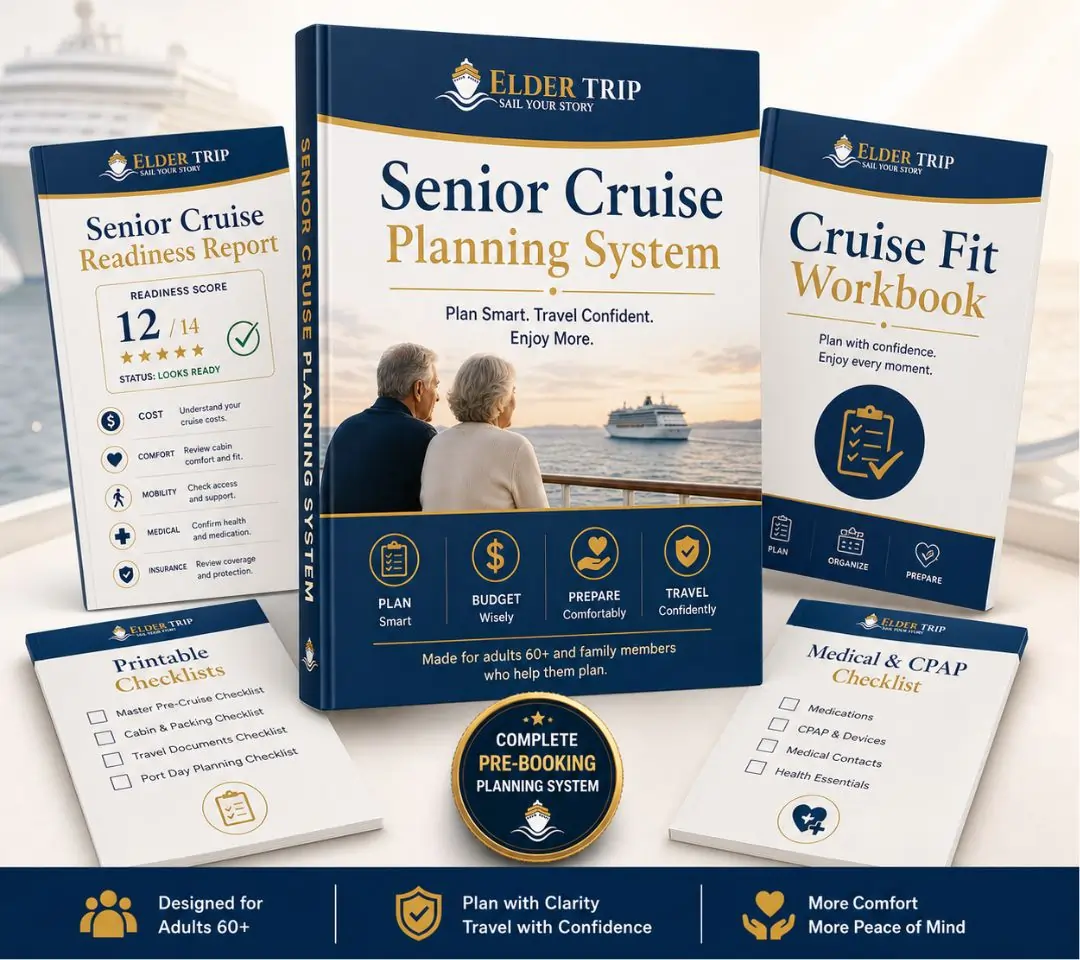
Use the ElderTrip Cruise Fit & Cost Planner 60+ to review real trip cost, comfort, walking demands, and booking fit before you pay a deposit.
See The Planner »
Reader Comments
Susan Walker
This is exactly how cruise planning feels for us now. It used to seem so much easier
Arthur Pendleton
@Susan Walker This is exactly how cruise planning feels for us now. It used to seem so much easier.|That is exactly what many older travelers are noticing. The trip itself may still sound exciting, but the decision often becomes more layered once comfort, walking, cost, and preparation all start affecting the same choice
James Porter
I always start with the fare and then realize later that the extras are what change the whole picture
Arthur Pendleton
@James Porter I always start with the fare and then realize later that the extras are what change the whole picture.|That happens all the time. The headline fare gets the attention first, but the fuller cost is often what determines whether the trip still feels like the right fit
Linda Brooks
The walking side is what worries me most because that part is never obvious at the beginning.|That is one of the most common issues older travelers mention, especially when the itinerary looks easier online than it feels in real life
Carol Mitchell
The point about organization being the problem instead of information really stood out to me
Arthur Pendleton
@Carol Mitchell The point about organization being the problem instead of information really stood out to me.|I am glad that stood out. Most people do not need more random advice. They usually need a clearer way to review the important details in one place before booking
Robert Hayes
We had too many tabs open last time and still did not feel confident about what we were booking
Arthur Pendleton
@Robert Hayes We had too many tabs open last time and still did not feel confident about what we were booking.|That is a very common experience. Looking at more pages does not always create more clarity, especially when the key details are never compared side by side
Patricia Allen
We keep saying we will figure out the details later, and later never seems to get easier.|That pattern catches many travelers because the unanswered questions usually feel more stressful after money is already committed
Donna Reed
I wish more cruise articles talked about comfort and pace instead of only destinations
Michael Turner
Cabin fit is a bigger issue than people realize, especially on longer trips
Nancy Collins
I sent this to my sister because she is helping our mother compare two cruises right now
Richard Foster
The idea that one cruise decision is really five smaller decisions makes a lot of sense.|That is often where people feel stuck. The trip looks simple at first, but the real decision has several moving parts underneath it
Barbara Green
I appreciated that this felt calm and realistic instead of pushy
Thomas Bailey
Insurance and document details are exactly the things we tend to leave until too late
Janet Morris
I would rather slow down than book just because a sale is ending
Edward Cooper
Do most people really miss the walking details until after they book?|Yes, that happens often because the headline details get attention first and the physical demands are reviewed too late
Margaret Lewis
The scattered notes comment was painfully accurate for me. I have screenshots all over the place
Steven Price
We are looking at Alaska and there are definitely more variables than I expected
Helen Carter
This makes me think we need one place to compare everything before deciding
George Bennett
Our last cruise was fine, but we definitely underestimated the pace side of it
Ruth Simmons
I like that this speaks to older travelers without sounding dramatic
David Ross
I would use a planner like this if it helped narrow down whether a cruise is actually a good fit before paying
Arthur Pendleton
@David Ross I would use a planner like this if it helped narrow down whether a cruise is actually a good fit before paying.|That is exactly the goal. A planning system like this is meant to help you slow the decision down in the right places so you can book with more confidence and less guesswork