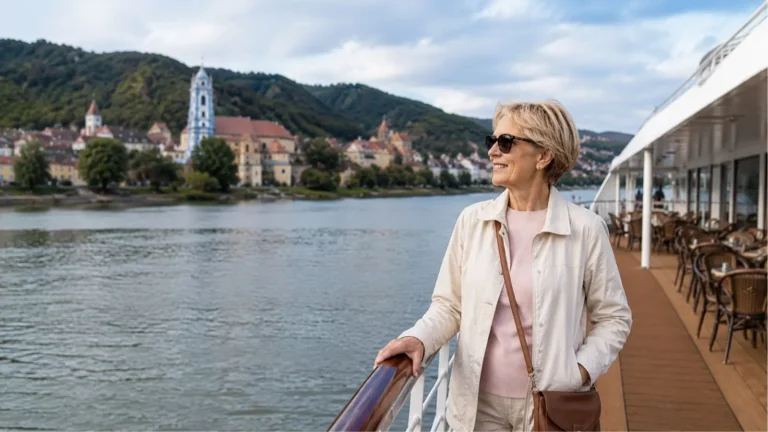
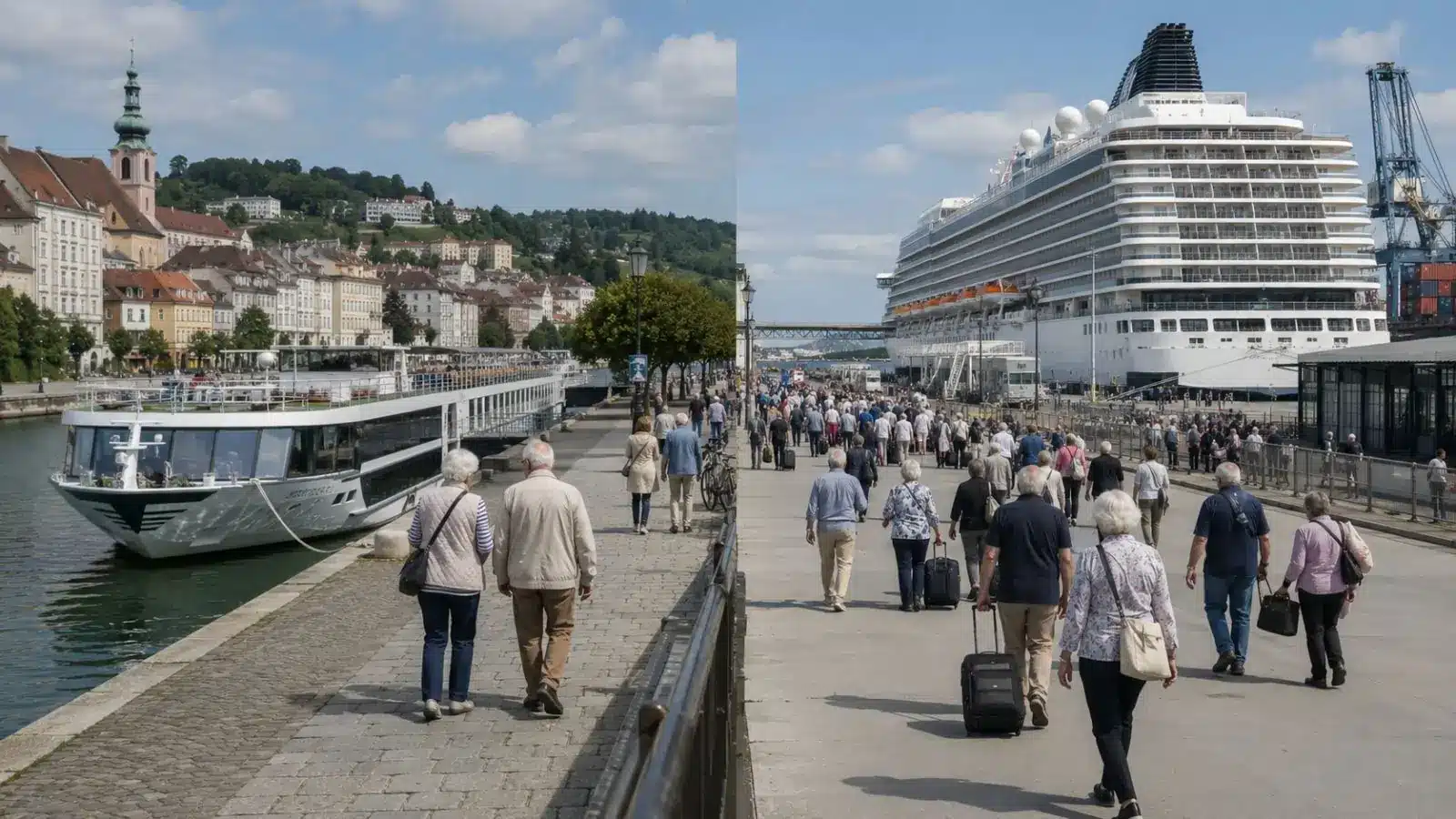
River cruise vs ocean cruise for seniors: my honest verdict after 50 voyages
My old friend tom called me last spring with a question he had been sitting on for months. he and his wife beverly were finally ready to book their first cruise. they had read everything they could find, and they were still stuck on the same question: river cruise or ocean cruise?
Tom is a retired civil engineer. he trusts data, not marketing. he wanted someone who had done both, many times, and would tell him the truth about river cruise vs ocean cruise for seniors without dressing it up like a brochure.
I have been sailing for twelve years across fifty-plus voyages. about thirty of those have been river cruises, and the rest ocean. by the end of this, you will know exactly which one fits your health, budget, energy, and idea of a good day.
Let me be direct about this. i do not have a simple answer. i have an honest one.
Table of contents
- The first difference: ship size and what it actually means
- Seasickness: the honest comparison
- The cost question: river cruises look more expensive until you add it all up
- The destination experience: docking in the heart of a city vs shuttling from a port
- Onboard experience: quiet vs variety
- Arthur’s verdict
The first difference: ship size and what it actually means
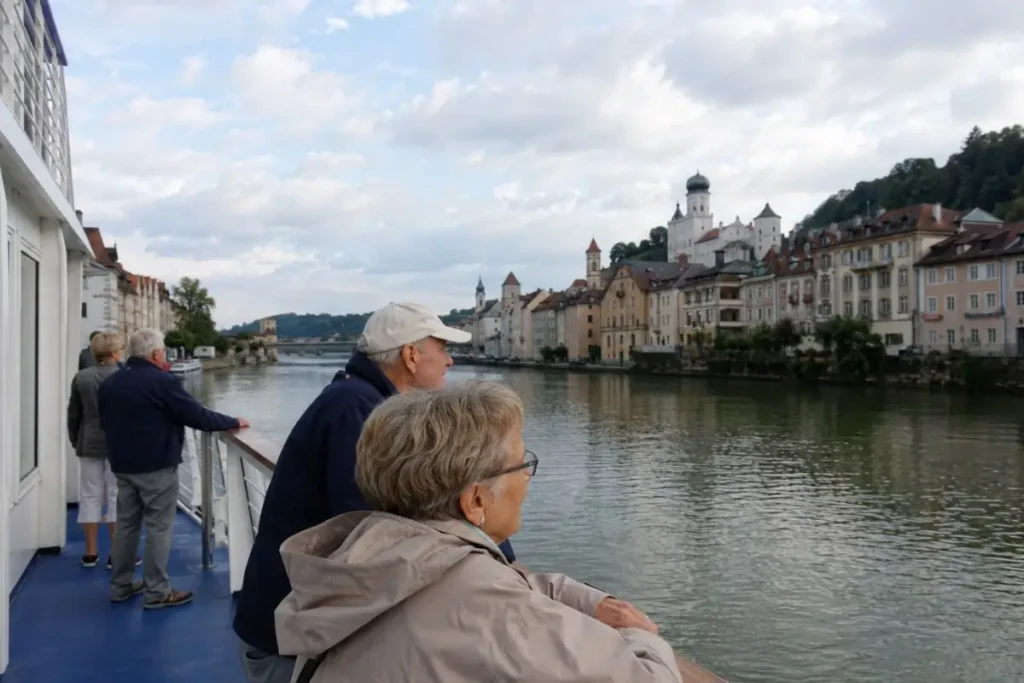
A river ship usually carries between 100 and 200 passengers. an ocean ship may carry fewer than 1,000 on a smaller luxury vessel or more than 6,000 on the largest resort-style ships. this difference in scale is not just a number. it changes the entire texture of daily life aboard.
On a river ship, you learn your fellow passengers’ names by day two. the dining room has one main seating. the crew starts to know your preferences. there are no long walks just to find breakfast, and there are no crowds pressing toward the same theater door.
On a large ocean ship, the scale can be genuinely tiring for older travelers. the distance from a mid-ship cabin to the dining room can feel longer than it looks on the deck plan. elevators are busiest at meal times, and shore excursion groups take longer to gather.
This is the one thing i wish someone had told me before my first large-ship sailing: the ship itself can become part of the daily workload. if your energy is precious, that matters.
When ocean ship size works in your favor
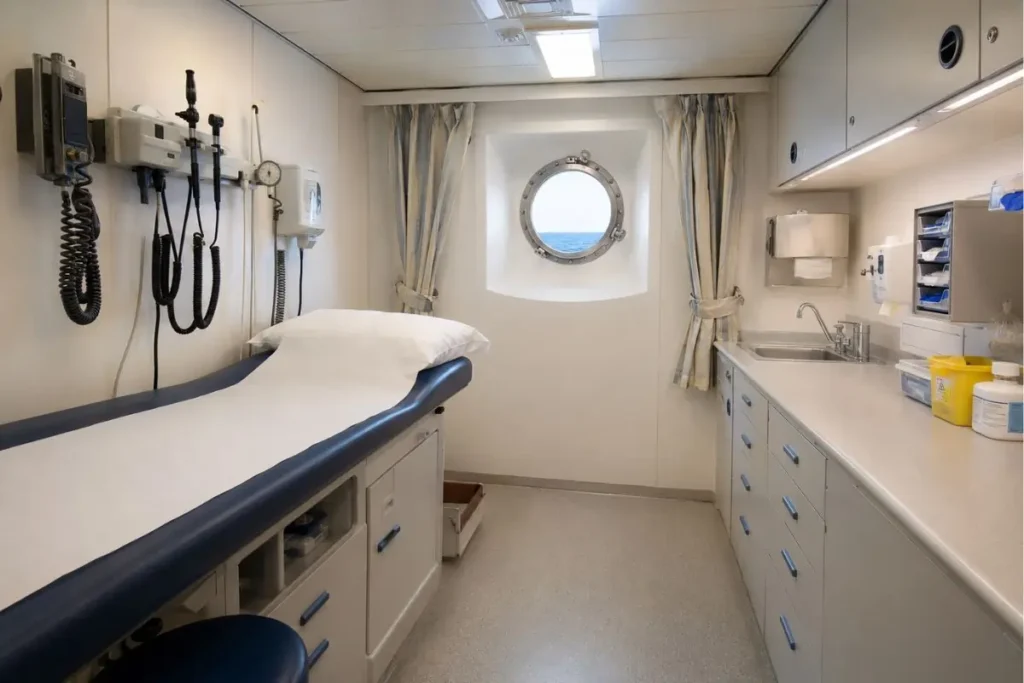
Larger ocean ships have something river ships almost never offer: more extensive onboard medical facilities. a large ship commonly has a clinic, medical staff, and equipment for urgent situations. a river ship usually has much more limited medical support.
If you have a medical condition that might require close monitoring or urgent intervention, this difference deserves serious weight. on a river ship, you are often near a town or city, but reaching outside care still requires docking, disembarkation, and transport.
On a large ocean ship mid-passage, the onboard clinic may be your only option for hours. for some travelers, that makes the bigger ship the more sensible choice. discuss this with your physician before booking either type of cruise.
Seasickness: the honest comparison
Here is what the booking websites will not tell you plainly enough: seasickness is a real concern for many seniors, and river cruising usually reduces that concern dramatically.
Rivers are calmer than open sea. there is no open-ocean swell, no long rolling motion, and no rough crossing where the ship has to push through weather for hours. that calmer setting is one reason many motion-sensitive travelers prefer river cruising.
Ocean ships have stabilizers, and modern large ships handle moderate seas far better than older vessels. but the ocean does what it wants. a crossing through the bay of biscay or a north atlantic passage can still be uncomfortable on a well-stabilized ship.
If seasickness is a genuine concern for you, the river cruise vs ocean cruise for seniors question may already be leaning strongly in one direction. i would still bring motion medicine if your doctor approves it, because cautious travelers sleep better.
The cost question: river cruises look more expensive until you add it all up
Don’t let the marketing fool you on this one. river cruises usually show a higher upfront fare than mainstream ocean cruises. that first number can make the ocean cruise look like the obvious bargain.
But river cruise fares often include shore excursions, wine and beer with meals, wi-fi, and sometimes gratuities. ocean cruise fares often start lower, then add excursions, drink packages, specialty dining, wi-fi, and daily gratuities. by the time you compare the final vacation bill, the gap may be smaller than it first looked.
Here’s what i tell my students, and what i’ll tell you: compare the trip you will actually take. if you know you want guided tours in every port, drinks with dinner, and fewer surprise charges, compare that complete package against the river fare. do not compare a bare ocean fare against an included river fare and call it fair arithmetic.
Where ocean cruises genuinely win on price
For seniors on a fixed budget who want to cruise without paying river cruise prices, a premium ocean line like holland america or celebrity cruises can offer a comfortable senior-friendly experience at a lower total cost.
If you book carefully, choose a shoulder-season sailing, limit paid excursions, and avoid buying every onboard package, the ocean cruise can absolutely be the more affordable option. the comparison only becomes misleading when you stack a stripped-down base fare against a more inclusive river cruise price.
The destination experience: docking in the heart of a city vs shuttling from a port
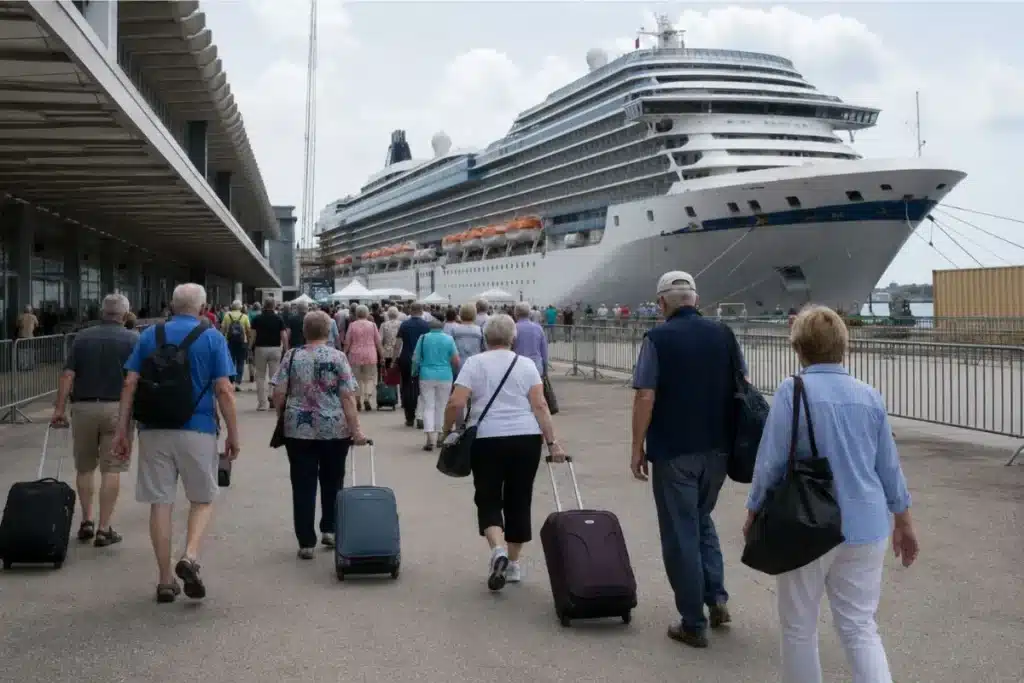
This is the difference i come back to most often when recommending one type over the other.
A river ship docks directly in vienna. you step off the gangway and you are close to the ringstrasse. in budapest, the ship may tie up along the danube with the city right in front of you. in cologne, you can step ashore within easy reach of the cathedral area.
An ocean cruise port often adds another layer. you may need a shuttle, a taxi, a water taxi, or a guided transfer before the real sightseeing begins. every extra step uses time and energy.
For seniors whose energy is a limited resource each day, walking directly off a river ship into a city center is not a small convenience. it can be the difference between seeing a cathedral properly and seeing it through the window of a bus.
Onboard experience: quiet vs variety
River ships do not have casinos, broadway-style shows, water parks, or a dozen restaurants. they usually have a dining room, a lounge, a sun deck, and a quiet place to read. evening entertainment is often a local musician, a port lecture, or a wine tasting.
If that description disappoints you, an ocean cruise is probably the better choice. larger ships offer real variety: multiple restaurants, theaters, pools, fitness centers, lectures, games, music, and programming for travelers who like a full schedule.
If that description sounds like a relief, a river ship may be exactly what you want. for many seniors past 60, the quieter pace aboard a river vessel is not a compromise. it is the entire point.
The side-by-side comparison
| Factor | River cruise | Ocean cruise |
|---|---|---|
| Ship size | Usually 100 to 200 passengers | Often hundreds to several thousand passengers |
| Seasickness risk | Very low on calm inland waterways | Variable, depending on route and weather |
| Medical facilities | Limited onboard medical support | More extensive clinic support on larger ships |
| Port access | Often close to city centers | Often port terminal plus transfer |
| Price structure | Higher upfront, more included | Lower upfront, more add-ons |
| Onboard entertainment | Quiet and simple | Broader variety and larger venues |
| Excursions included | Often one included per port | Usually priced separately |
| Sailing distance | Shorter, often docked at night | Longer passages and sea days |
| Atmosphere | Intimate and calm | Varied by line and ship |
For a deeper look at what makes river cruising specifically suited to the senior traveler, see my full guide to river cruises for seniors, where i cover cruise line comparisons and itinerary choices in detail.
What I told Tom
Tom asked me for a recommendation, not a comparison table. so here is what i told him.
If you want to see european cities up close, at a calm pace, without much motion sickness worry or crowded ship corridors, and you are comfortable spending more upfront for a more included experience, book a river cruise.
If you want variety, entertainment, more onboard activity, more dining choice, broader medical support on the ship, and a lower entry price, book a premium ocean cruise on a line like holland america or celebrity where the atmosphere is calmer and the demographic often skews older.
Tom booked the danube. he has already asked me about the rhine for next year. beverly is researching the seine.
If you are still deciding which european river to start with, my guide to european river cruises for seniors compares the danube, rhine, douro, and seine by terrain, pace, and what kind of traveler each suits best.
Arthur’s verdict
River cruise vs ocean cruise for seniors is not a competition with one permanent winner. it is a question about what kind of traveler you are and what you want from the next chapter of your travel life.
I book river cruises for the intimacy, the city-center docking, and the calmer water. i book ocean cruises for caribbean warmth in january, for the onboard variety, and for the times when margaret wants more dining options than a single dining room can offer.
Both have earned their place in twelve years of cruising. i do not plan to give either up. but if someone who had never cruised before asked me which to try first, i would usually say the river.
It is quieter, easier to understand, and kinder to travelers who want the destination to matter more than the ship. that, to my old-fashioned mind, is a very good first cruise.
Want tips like these every week?
Arthur & Margaret share honest cruise reviews, senior-friendly port guides, and exclusive deals — straight to your inbox. 2,000+ readers. No spam.
Questions I’m often asked
Which is better for seniors, river cruise or ocean cruise?
Neither is universally better. river cruises offer easier port access, calmer water, smaller ships, and a more included price structure that suits many seniors well. ocean cruises offer more onboard variety, stronger medical facilities on larger ships, and a lower starting price on many mainstream lines.
Are river cruises better for people with mobility problems?
In some ways yes, and in some ways no. river ships are smaller and easier to navigate, and city-center docking can reduce transfer distance ashore. however, accessible cabin options are often limited, and gangways can be steep when river levels are low. check the exact ship before booking, and ask your physician about travel readiness.
Do river cruises include excursions in the price?
Most river cruise fares include at least one guided excursion per port, along with meals, wine and beer with meals, and wi-fi. what varies is the walking level and whether coach-based or gentle-walking options are available. ocean cruise fares typically price excursions separately.
Is a river cruise worth the extra cost compared to an ocean cruise?
It can be, especially if you want guided excursions, drinks with meals, city-center docking, and fewer add-on decisions. if you prefer sea days, shows, pools, and a lower starting fare, the ocean cruise may give you better value for your actual preferences.
Can seniors prone to seasickness safely book a river cruise?
Usually, yes. river cruising takes place on calmer inland waterways, so it avoids the open-sea rolling and pitching that bother many motion-sensitive travelers. i would still speak with your doctor if you have a strong history of motion sickness, because peace of mind is part of a good trip.